Do You Need to Fast for a Cholesterol Test? When Fasting Changes the Result
Learn when non-fasting lipid testing is acceptable, which values change most after eating, and when a fasting repeat genuinely improves interpretation.
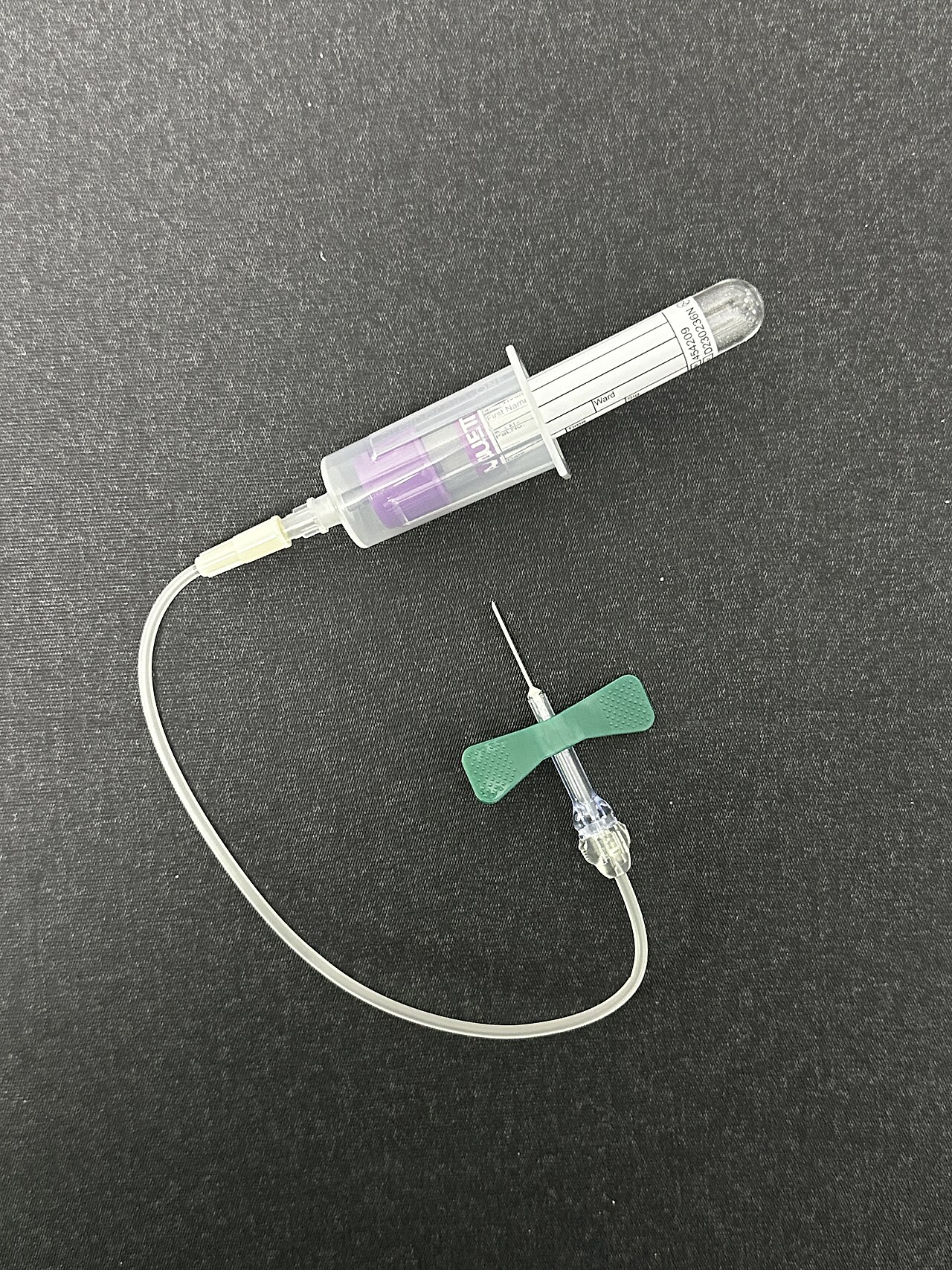
Image: Whispyhistory / Wikimedia Commons / CC BY 3.0 us
Most people do not need to fast before a routine lipid panel. A 2016 joint European Atherosclerosis Society and European Federation of Clinical Chemistry consensus statement, along with subsequent guideline endorsement, established that non-fasting lipid testing is acceptable for general cardiovascular risk screening, since total cholesterol, HDL, and calculated LDL change only modestly after a normal meal. Triglycerides are the value most affected by eating and can rise noticeably in the hours after a meal. Fasting becomes more useful in specific situations: when triglycerides are markedly elevated on a non-fasting test, when a metabolic or inherited lipid disorder is suspected, or when monitoring a previous abnormal result over time for consistency.
The "you must fast for 12 hours before a cholesterol test" instruction is a holdover that guideline bodies have since revised for most routine screening. The practical takeaway: don’t stress about accidentally eating breakfast before a scheduled lipid panel in most cases, but do mention it, and consider a fasting repeat if your triglycerides come back unexpectedly high.
- Non-fasting lipid testing is now considered acceptable for general cardiovascular risk screening by major guideline bodies.
- Triglycerides are the value most affected by recent food intake; total cholesterol and HDL change only modestly.
- A fasting repeat is most useful when non-fasting triglycerides are markedly elevated, or when an inherited lipid disorder is suspected.
- A broken fast doesn’t automatically invalidate a lipid result — it mainly affects interpretation of the triglyceride value specifically.
What the test measures
A lipid panel measures the same four core values whether fasting or not: total cholesterol, HDL, triglycerides, and calculated LDL. What changes between fasting and non-fasting states is not what’s being measured, but how much recent food intake is contributing to the triglyceride component specifically, and by extension, how accurate the calculated LDL-C formula (which uses triglycerides) remains.
How the main pattern is interpreted
For general screening purposes, a non-fasting panel is interpreted essentially the same way a fasting panel would be, with the understanding that triglycerides may run somewhat higher than your true fasting baseline. If a non-fasting triglyceride result is mildly elevated, that alone usually isn’t concerning. If it’s markedly elevated, distinguishing a temporary post-meal effect from a genuinely high fasting baseline becomes clinically relevant, which is where a fasting repeat adds real value.
Reference ranges versus cardiovascular-risk thresholds
The 2016 EAS/EFLM consensus statement specifically addressed this question and concluded that non-fasting testing is acceptable for the purpose of general cardiovascular risk assessment, representing a genuine shift from older practice that defaulted to universal fasting. The same consensus statement, echoed in subsequent guideline discussion, identifies a non-fasting triglyceride level of roughly 440 mg/dL (5 mmol/L) as a threshold above which a fasting sample is recommended to clarify the true baseline — a specific, named threshold rather than a general impression.
What can distort the result
A recent meal, particularly one high in fat, is the primary factor affecting a non-fasting triglyceride result — levels can rise meaningfully in the hours following eating before returning to baseline. Alcohol consumed in the prior day or two can also elevate triglycerides regardless of fasting status. Because calculated LDL-C depends on the triglyceride value, a triglyceride-elevating meal can modestly affect the accuracy of a non-fasting calculated LDL-C as well.
What the result does not prove
A non-fasting lipid panel does not automatically mean your results are inaccurate or unusable — for total cholesterol, HDL, and most calculated LDL values, the difference from a fasting result is generally modest. It also doesn’t mean every non-fasting elevated triglyceride reflects a true metabolic problem; it may simply reflect recent food intake.
Common misunderstandings
A common misunderstanding is assuming any non-fasting lipid result is invalid and needs to be redone. For most routine screening purposes, this isn’t necessary — non-fasting testing is explicitly endorsed by current consensus guidance. The opposite misunderstanding — assuming fasting is now completely unnecessary in every situation — overlooks the specific scenarios (markedly elevated triglycerides, suspected inherited lipid disorders, monitoring a known abnormality) where a fasting sample still adds real clarity.
Practical next-step guidance
For a routine screening lipid panel, eating normally beforehand is generally fine under current guidance — check with your specific lab or clinician if you’re uncertain about their particular protocol. If your non-fasting triglycerides come back markedly elevated, a fasting repeat (typically 9–12 hours without food, water permitted) is a reasonable next step to clarify your true baseline. If you’re being evaluated for a suspected inherited lipid disorder or monitoring a previously abnormal result, ask specifically whether a fasting sample is preferred in your situation.
- A non-fasting triglyceride result at or above roughly 440 mg/dL (5 mmol/L) is a reasonable prompt for a fasting repeat to clarify whether this reflects a temporary post-meal effect or a true elevated baseline, per consensus guidance.
- If you take medicines that require food, don’t skip them to achieve a fast without first checking with a clinician or pharmacist.
- Water is generally permitted during a fasting period; this article does not provide instructions for any medicines that may need to be taken with food, which should be discussed with a clinician or pharmacist.
Limitations and uncertainty
Exact lab protocols for what counts as "acceptable" non-fasting testing can vary somewhat by institution, and a single non-fasting or fasting result either way remains a snapshot rather than a full picture of your typical pattern.
Frequently asked questions
Evidence Snapshot
This snapshot shows verified evidence records matched to this article. It is not a diagnosis or personal medical advice.
A standard lipid panel typically reports total cholesterol, HDL cholesterol, LDL cholesterol (usually calculated) and triglycerides, from which non-HDL cholesterol can be derived as total cholesterol minus HDL.
Limitation. A standard lipid panel does not directly report ApoB or Lipoprotein(a), which are separate tests when needed.
A comprehensive metabolic panel is used as a broad screen of overall metabolic status, kidney and liver function and electrolyte balance, and is not designed to diagnose a specific single condition on its own.
Limitation. A comprehensive metabolic panel does not include cholesterol, thyroid tests or a complete blood count and therefore does not cover every routine screening domain.
Related articles
 Laboratory Tests
TSH Test: Normal Range, High, Low & What Your Result Actually Means
TSH is the single most important thyroid number. Understand normal ranges by age and pregnancy, what a high or low value really tells you, and the two follow-up tests that clinch the diagnosis.
 Laboratory Tests
HbA1c Test: Normal Range, Prediabetic, Diabetic Cut-offs & How to Lower It
HbA1c reflects your average blood sugar over ~3 months. Understand every threshold — normal, prediabetes, diabetes — and the realistic actions that move the number.
 Laboratory Tests
LDL Cholesterol: Optimal Numbers, High Numbers, and How to Read Yours
LDL is the "bad" cholesterol only if you leave the story there. Understand optimal targets by risk group, the ApoB perspective, and the interventions that actually shift the number.