TSH Test: Normal Range, High, Low & What Your Result Actually Means
TSH is the single most important thyroid number. Understand normal ranges by age and pregnancy, what a high or low value really tells you, and the two follow-up tests that clinch the diagnosis.
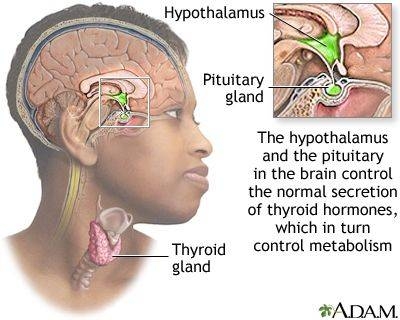
A normal adult TSH sits between 0.4 and 4.0 mIU/L. Above 4.0 usually means an underactive thyroid; below 0.4 usually means an overactive one. Because TSH moves in the OPPOSITE direction to thyroid activity, one number rarely closes the case — a free T4 (and sometimes free T3) confirms which way the gland is failing.
TSH is the pituitary hormone that tells the thyroid to release T4. When thyroid output falls, TSH rises; when it surges, TSH falls. The reference range is 0.4–4.0 mIU/L for most non-pregnant adults, with tighter cut-offs in pregnancy and slightly looser upper limits after age 70. TSH between 4 and 10 with normal free T4 is subclinical hypothyroidism; TSH above 10 or with low free T4 is overt hypothyroidism and warrants treatment. Suppressed TSH with high free T4 or T3 is hyperthyroidism — check TSH-receptor antibodies for Graves’ disease.
- Normal adult TSH
- 0.4 – 4.0 mIU/L
- Pregnancy trimester 1
- 0.1 – 2.5 mIU/L
- High TSH means
- Underactive thyroid (hypothyroidism)
- Low TSH means
- Overactive thyroid (hyperthyroidism)
- Best confirmatory test
- Free T4 (± free T3, TPO antibodies)
What TSH actually measures
TSH — thyroid stimulating hormone — is made in the pituitary gland at the base of the brain. When the thyroid produces enough thyroid hormone (T4 and T3), the pituitary quiets down and TSH stays low-normal. When thyroid output falls, the pituitary shouts louder and TSH rises. The relationship is inverse and logarithmic: even a small drop in thyroid hormone triggers a large rise in TSH, which is why TSH is the most sensitive first-line thyroid test.
Because of this feedback loop, TSH detects thyroid dysfunction long before the patient feels anything. National screening guidelines (ATA, NICE, Endocrine Society) all recommend TSH as the initial test in almost every situation — fatigue workup, weight change, palpitations, menstrual irregularities, subfertility, cholesterol elevation of unclear cause, or new atrial fibrillation.
TSH result interpretation at a glance
| TSH result | Likely meaning | What to check next | Typical action |
|---|---|---|---|
| < 0.1 mIU/L | Overt hyperthyroidism (suppressed) | Free T4, free T3, TSH-receptor antibodies | Endocrine referral, symptom control |
| 0.1 – 0.4 | Subclinical hyperthyroidism | Repeat in 6–8 weeks + free T4 | Repeat, check causes (meds, nodule) |
| 0.4 – 4.0 | Normal | — | None if asymptomatic |
| 4.0 – 10.0 | Subclinical hypothyroidism | Free T4, TPO antibodies, repeat in 6–8 weeks | Treat if pregnant, planning pregnancy, symptomatic, or antibodies positive |
| > 10.0 | Overt hypothyroidism | Free T4, TPO antibodies | Start levothyroxine |
Why the "normal" range shifts
The 0.4–4.0 range is not universal. Pregnancy pushes the upper limit down — trimester-specific cut-offs are roughly 2.5, 3.0 and 3.5 mIU/L for T1, T2 and T3 respectively. Age nudges it up — a TSH of 5–6 in a well 80-year-old is usually just age-related pituitary drift and not treated. Assay differences between labs mean two labs can give slightly different numbers on the same sample; always interpret against the reporting lab’s reference range.
Biotin supplements (found in hair/nail/skin products) can falsely lower TSH readings on some assays — stop biotin 48 hours before the draw. Recent iodinated contrast, amiodarone, lithium, and high-dose steroids all move TSH. Acute illness (any hospital admission) transiently suppresses TSH — this is "non-thyroidal illness syndrome", not real disease, and re-testing 6–8 weeks after recovery is the right move.
How to read a slightly abnormal TSH
One abnormal TSH is not a diagnosis. TSH varies day-to-day by roughly 20–30%, and diurnal rhythm makes early-morning readings ~1 mIU/L higher than afternoon draws. National guidelines advise repeating a mildly abnormal result in 6–8 weeks before acting. Persistent subclinical hypothyroidism (TSH 4–10 with normal free T4) is treated only when the patient is pregnant, planning pregnancy, symptomatic, or has positive TPO antibodies with rising TSH — otherwise the recommendation is watchful monitoring.
Suppressed TSH (below 0.1) is a stronger flag. It doubles the risk of atrial fibrillation and accelerates bone loss, so it is generally investigated more urgently than an equivalent-magnitude rise. Check free T4, free T3 and TSH-receptor antibodies for Graves’ disease; consider thyroid ultrasound if a nodule is palpable.
- You are pregnant or planning pregnancy (target TSH < 2.5 mIU/L in early pregnancy).
- You have new atrial fibrillation, unexplained palpitations, or heat/cold intolerance.
- You are on amiodarone, lithium, or biological therapy for cancer immunotherapy.
- You have a newly discovered thyroid lump or eye protrusion.
- You have unexplained weight loss, tremor, or worsening depression.
TSH follow-up decision tree
- 1TSH slightly high (4–10) and you feel fine?Repeat in 6–8 weeks with free T4 and TPO antibodies. Treat only if pregnant, planning pregnancy, symptomatic, or TPO positive with rising TSH.
- 2TSH above 10 or low free T4?Start levothyroxine (typical dose 1.6 mcg/kg/day; smaller doses in older patients or coronary disease).
- 3TSH suppressed but free T4 normal?Subclinical hyperthyroidism — repeat, screen for atrial fibrillation, review medications (levothyroxine over-replacement, amiodarone, biotin interference).
- 4TSH suppressed with high free T4/T3?Overt hyperthyroidism — endocrine referral, TSH-receptor antibody testing, radioiodine uptake or thyroid ultrasound.
- 5TSH and free T4 both low?Suggests central (pituitary) hypothyroidism — MRI pituitary, check other pituitary hormones.
Related questions people ask
- Can biotin supplements affect TSH results?
- What is subclinical hypothyroidism?
- Do I need to fast for a TSH test?
- What is the TSH target in pregnancy?
- Can stress cause a high TSH?
- Which is more accurate — TSH or free T4?
- Should everyone with fatigue have a TSH?
Frequently asked questions
- TSH is the first-line thyroid test — high means underactive, low means overactive.
- The 0.4–4.0 mIU/L range is a guide, not a fence — pregnancy, age, assay, and drugs all shift it.
- Mildly abnormal TSH should be REPEATED in 6–8 weeks before treatment.
- Overt hypothyroidism (TSH > 10 or low free T4) always warrants levothyroxine.
- Suppressed TSH raises AF and bone-loss risk — investigate urgently.
- Biotin, amiodarone, lithium, and acute illness can produce misleading TSH values.
References
3 sources- American Thyroid AssociationGuidelines for Hypothyroidism in Adults
Consensus thresholds and treatment algorithms.
thyroid.org
- NICE NG145Thyroid disease: assessment and management
UK primary-care thyroid testing pathway.
nice.org.uk
- Endocrine Society Clinical Practice Guidelines
Thyroid dysfunction in pregnancy and postpartum.
endocrine.org
Evidence Snapshot
This snapshot shows verified evidence records matched to this article. It is not a diagnosis or personal medical advice.
TSH shows diurnal variation, with values typically higher during the night and lower in the afternoon, so samples drawn at different times of day can differ within an individual.
Limitation. The magnitude of diurnal TSH variation differs between individuals and no single correction factor applies universally.
TSH is generally used as the first-line laboratory test to assess thyroid function in adults, with additional thyroid measurements typically added when TSH is abnormal or when central (pituitary) causes are suspected.
Limitation. TSH is not sufficient by itself to distinguish primary from central hypothyroidism or every cause of thyroid dysfunction.
The upper limit of the TSH reference range appears to shift modestly upward with age in adults, so a TSH considered borderline high in a young adult may fall within an age-appropriate range in an older adult.
Limitation. Precise age-specific TSH cut-offs are not uniform across laboratories or guideline bodies.
Related articles
 Laboratory Tests
HbA1c Test: Normal Range, Prediabetic, Diabetic Cut-offs & How to Lower It
HbA1c reflects your average blood sugar over ~3 months. Understand every threshold — normal, prediabetes, diabetes — and the realistic actions that move the number.
 Laboratory Tests
LDL Cholesterol: Optimal Numbers, High Numbers, and How to Read Yours
LDL is the "bad" cholesterol only if you leave the story there. Understand optimal targets by risk group, the ApoB perspective, and the interventions that actually shift the number.
 Laboratory Tests
Creatinine and eGFR: How to Read Your Kidney Function Blood Test
Creatinine and eGFR together tell you how well your kidneys are filtering. Learn what each number means, why muscle mass and race adjustments matter, and when a low eGFR is genuinely concerning.