Fulvic Acid in Shilajit: What the Percentage Tells You, and What It Does Not
Fulvic acid is an important component discussed in Shilajit research, but a higher reported percentage does not automatically mean a safer, more authentic or more effective product. Results depend on sample preparation and analytical method. Compare values only when methods and reporting bases are comparable. Review fulvic acid alongside identity, contaminants, dose and batch traceability.
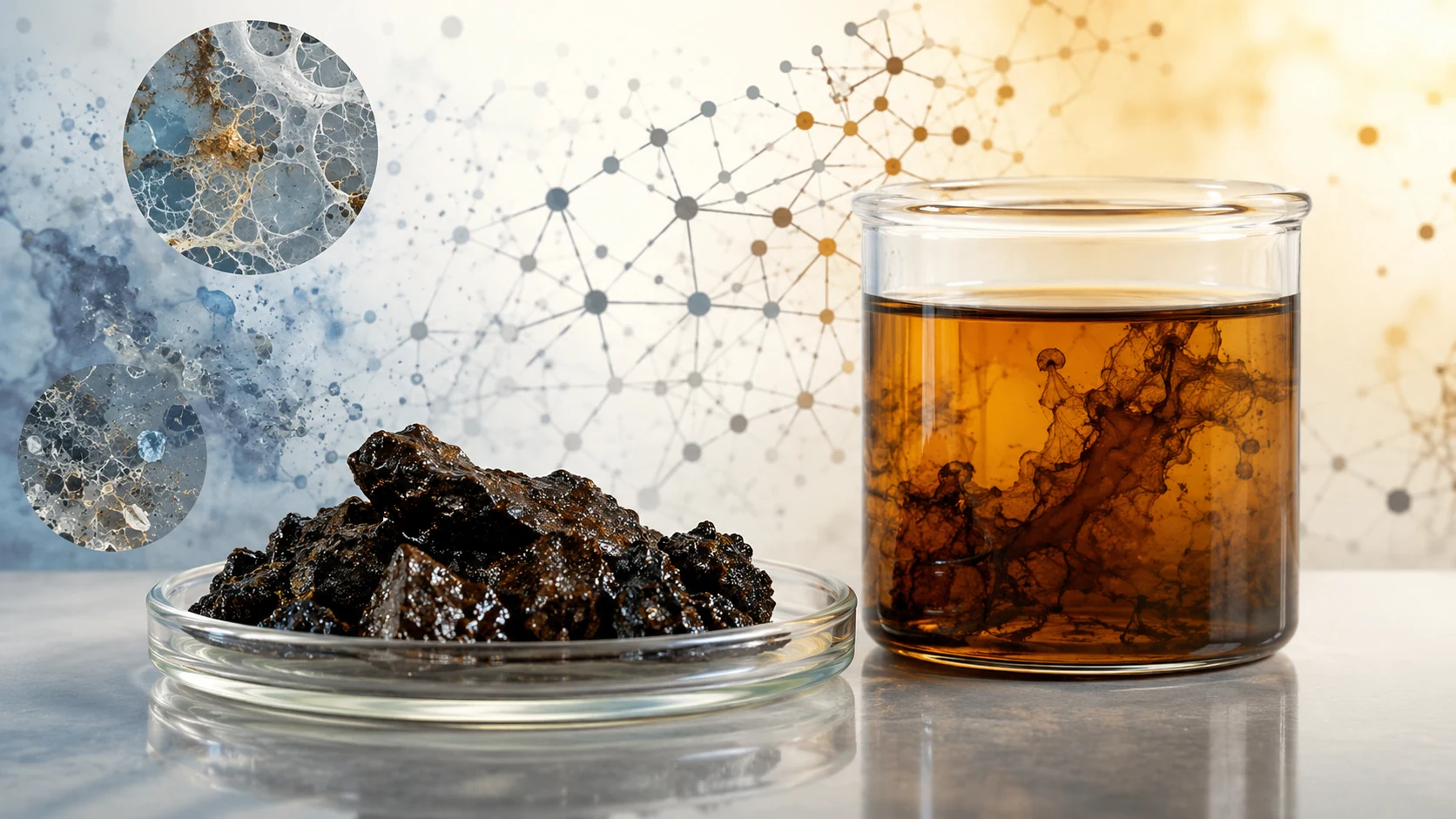
Fulvic acid is one part of Shilajit’s complex mixture. A reported percentage can help describe a tested sample. It does not independently prove authenticity, safety, clinical effectiveness or superiority. The analytical method and reporting basis matter. Results produced by different approaches may not be directly comparable.
What Fulvic Acid Is
Fulvic acids are lower-molecular-weight fractions within humic substances.
Shilajit also contains humic acids, minerals and other organic components. Its composition varies by source and processing.
Marketing often reduces this complex material to one number. That is convenient, but incomplete.
Why the Percentage Varies
A reported value can change because of:
A dry powder value and a wet resin value may not be comparable unless the basis is clear.
- Geographic source.
- Processing method.
- Moisture content.
- Sample preparation.
- Extraction conditions.
- Calibration approach.
- Analytical method.
- Wet-weight or dry-weight reporting basis.
Higher Is Not Automatically Better
A high fulvic-acid percentage does not show that heavy metals are controlled.
It does not establish microbiological quality. It does not prove that the product matches a human study. It does not prove better absorption or better results.
A very high claim should prompt questions about the method, basis and whether isolated fulvic material was added.
Why Method Transparency Matters
A report should identify the method used.
Without the method, the number is difficult to interpret. Two laboratories can produce different results because they define, extract or quantify fulvic fractions differently.
Compare products only when the methods and reporting bases are sufficiently similar.
Fulvic Acid and Human Evidence
Human Shilajit studies generally tested specific purified or standardised preparations.
A fulvic-acid percentage alone does not establish equivalence to those study products.
Clinical relevance depends on the whole preparation, dose, population, duration and measured outcome.
Does Fulvic Acid Prove Authenticity?
No.
A result can support the presence or amount of a measured fraction. It does not prove geographic origin, traditional processing, absence of adulteration or complete identity.
Authenticity decisions require several forms of evidence, including traceability, formulation information and competent testing.
What Else Should Be Checked?
Review:
If a seller claims a precise percentage, ask for the batch-specific report supporting that exact claim.
- Batch number.
- Laboratory identity.
- Test date.
- Method.
- Reporting basis.
- Moisture or dry-weight basis where relevant.
- Heavy metals.
- Microbiological quality control.
- Ingredient list.
- Source information.
- Dose per serving.
Common Myths
Dark colour does not prove high fulvic acid.
Solubility does not prove purity.
A burn test does not quantify fulvic acid.
One high result does not validate future batches.
A higher number does not automatically mean a better clinical result.
How to Compare Two Products
First confirm that both reports use comparable methods and bases.
Then check whether the reports match the current batches. Review contaminant testing, dose and formulation.
Do not rank products solely by one percentage when the methods differ or the rest of the quality file is incomplete.
Avoid statements such as highest quality, strongest, most effective or clinically superior based only on a fulvic-acid result. A laboratory number should be described as a result for the tested sample, not as proof of complete product quality.
Use fulvic acid as one descriptive quality signal, not as the single score for Shilajit. A credible product needs method transparency, batch traceability, contaminant control, formulation clarity and disciplined claims.
Frequently asked questions
Editorial disclosure: The platform has commercial relationships with companies involved in Shilajit products. Affiliated and unaffiliated products are evaluated using the same published evidence and quality criteria. This article does not independently verify every product or batch.
Related articles
 Supplements
How Much Shilajit Should You Take? Study Doses, Product Labels and Practical Limits
There is no single evidence-based Shilajit dose for everyone. Human studies most often used 200 mg to 500 mg daily, while one collagen-biomarker trial tested 500 mg and 1,000 mg daily. These doses came from specific purified, processed or standardised preparations. They should not be copied blindly to every resin, capsule, gummy, powder or liquid. A practical dose decision starts with the exact formulation, measured serving, batch quality, study goal and personal health context.
 Supplements
Who Should Not Take Shilajit? Safety Questions That Matter Before You Start
Pregnant or breastfeeding people, children, people taking prescription medicines, those with diagnosed medical conditions, anyone planning surgery, and people with fertility, hormonal, bone-health or persistent-fatigue concerns should not start Shilajit without professional advice. Safety findings from small studies apply only to the tested preparations, doses and durations. Product identity, processing and batch-specific testing also matter.
 Supplements
What Makes Shilajit Safe to Use? A Practical Guide to Batch Testing and COAs
A useful Shilajit quality file links a real batch to a named laboratory, test date, methods, units and measured results. A generic certificate, old report or marketing badge does not verify the jar in your hand. Heavy metals, microbiology, formulation identity and claimed composition should be interpreted together. One result applies only to the tested sample or batch.