How Much Shilajit Should You Take? Study Doses, Product Labels and Practical Limits
There is no single evidence-based Shilajit dose for everyone. Human studies most often used 200 mg to 500 mg daily, while one collagen-biomarker trial tested 500 mg and 1,000 mg daily. These doses came from specific purified, processed or standardised preparations. They should not be copied blindly to every resin, capsule, gummy, powder or liquid. A practical dose decision starts with the exact formulation, measured serving, batch quality, study goal and personal health context.
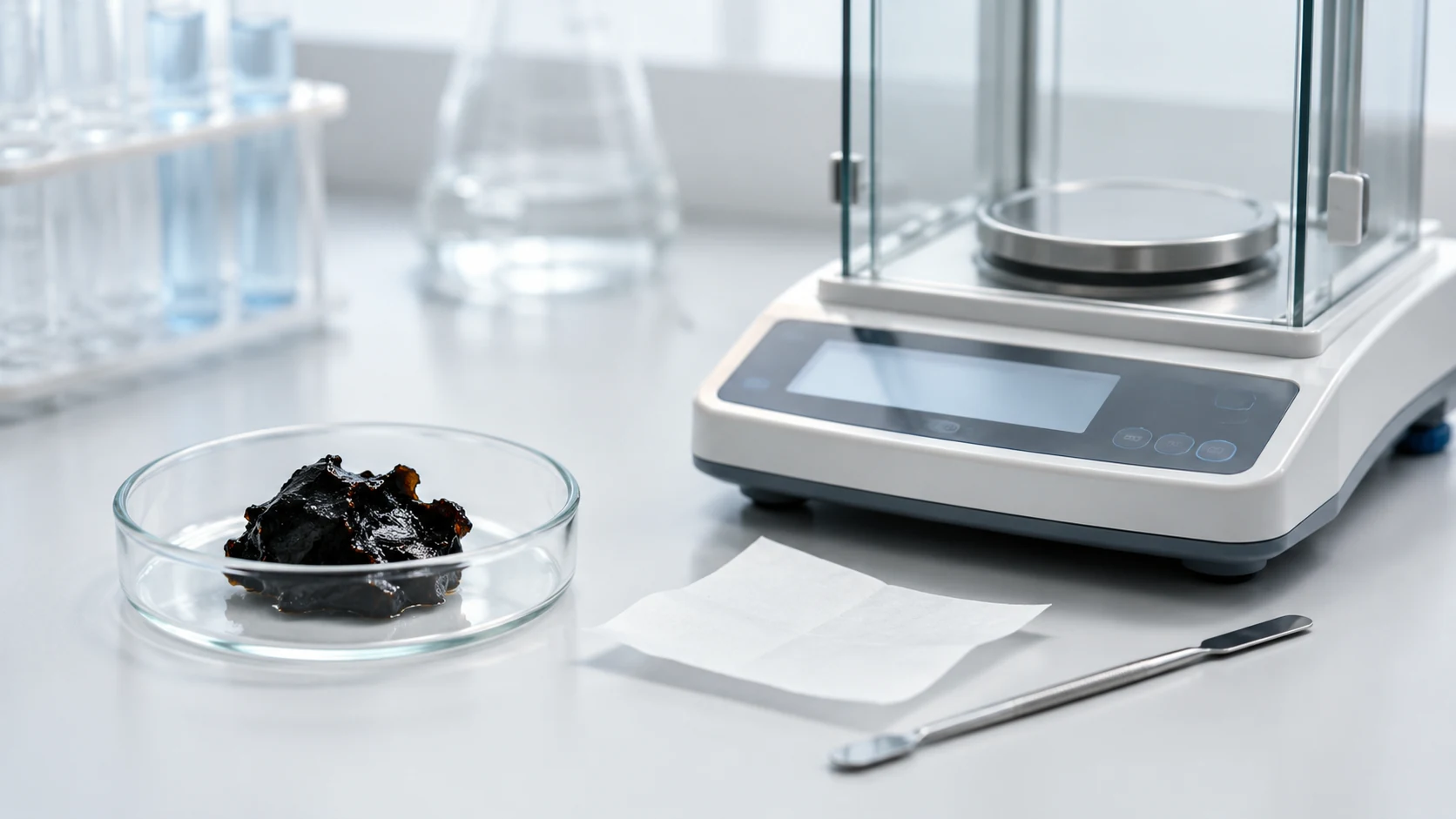
There is no universal Shilajit dosage that has been proven suitable for every person, goal and product. Human trials have used different amounts because they tested different preparations and outcomes. The most common daily range in human research is 200 mg to 500 mg. One collagen-biomarker study tested up to 1,000 mg daily. These numbers are useful evidence landmarks, not automatic instructions for every commercial product. A dose only has meaning when you know what the product contains. Purified extracts, processed Shilajit, resin, dried powder, capsules, gummies and liquids may differ in composition, moisture, concentration and serving accuracy.
Human studies used: These are study doses, not a universal prescription. Use a measured serving. Do not rely on vague instructions such as pea-sized, rice-grain-sized or one spoon unless the amount is also stated in milligrams. - 500 mg daily for 90 days in a testosterone trial. - 250 mg or 500 mg daily for eight weeks in a muscular-fatigue trial. - 200 mg daily for 90 days in an open-label semen-parameter study. - 250 mg or 500 mg daily for 48 weeks in a bone-density trial. - 500 mg or 1,000 mg daily for eight weeks in a collagen-biomarker trial. - 500 mg daily for 28 days in an open-label resin pilot.
What Researchers Actually Used
The testosterone trial used a specific purified Shilajit preparation at 250 mg twice daily, for a total of 500 mg daily, over 90 days in healthy men aged 45 to 55.
The fatigue-related strength study compared 250 mg daily, 500 mg daily and placebo for eight weeks in physically active men. The clearer finding appeared at 500 mg daily.
The semen-parameter study used processed Shilajit at 100 mg twice daily after meals, for a total of 200 mg daily, over 90 days. This study had no placebo group.
The bone-density trial tested 250 mg and 500 mg daily for 48 weeks in postmenopausal women with osteopenia.
The collagen-biomarker trial tested 500 mg and 1,000 mg daily for eight weeks. It measured serum Pro-C1α1, not a direct clinical improvement.
The 2026 open-label resin pilot used 250 mg twice daily, for a total of 500 mg daily, over 28 days.
Why Study Doses Are Not Universal Instructions
A dose from a clinical study applies to the product used in that study. A 500 mg standardised extract is not automatically equivalent to 500 mg of wet resin, dried resin powder, a gummy blend or a diluted liquid.
Water content can affect the weight of resin. Extract concentration can affect the amount of measured components. Multi-ingredient products may state a total blend weight that is larger than the amount of Shilajit.
Population also matters. A dose studied for testosterone markers in healthy middle-aged men does not automatically become the correct dose for women, younger adults, fatigue, fertility or bone health.
Resin, Capsules, Gummies and Liquid
Resin should be measured by weight. Visual descriptions are inconsistent. A small scoop or calibrated scale provides a clearer amount than a pea-sized estimate.
Capsules should state the amount of Shilajit per capsule and identify whether the ingredient is a purified extract, dried resin or blend.
Gummies may contain sweeteners, flavours and several active ingredients. Check the supplement facts panel rather than relying on the front-label claim.
Liquid products should state the concentration per millilitre or measured dropper. Drop count alone is imprecise because drop size varies.
Is More Better?
Current human evidence does not show that higher doses produce broader or faster benefits.
The 1,000 mg dose appeared in a biomarker study. It does not establish 1,000 mg as a superior general dose. Higher intake may increase cost and exposure without producing a meaningful benefit.
Do not combine several Shilajit products unless the total amount and full ingredient list are clear.
Practical Dose Framework
For a healthy adult considering a purified, standardised and batch-tested product, the published human evidence most often falls between 200 mg and 500 mg daily.
This is an evidence summary, not personal medical advice. Start only with a clearly measured serving. Follow the product instructions when they are transparent and reasonable. Avoid increasing the amount simply because no immediate effect is noticed.
Study durations ranged from 28 days to 48 weeks. No study guarantees that an individual will feel a result within a specific period.
Professional advice should come first for pregnancy, breastfeeding, prescription medication use, diagnosed medical conditions, planned surgery, persistent fatigue, fertility concerns, hormonal concerns and bone-density concerns. Children should not use Shilajit because paediatric safety, dosing and benefit are not established.
What to Verify Before Following a Label
Check the batch number, exact serving amount, formulation, ingredient list, laboratory identity, test date, methods, heavy-metal results and microbiological quality-control results.
A label dose does not prove that the product matches a clinical study. The seller should explain what the product contains and how much is delivered.
The evidence does not support one perfect Shilajit dose. Most human studies used 200 mg to 500 mg daily, but preparation and purpose changed from study to study. Use a measured serving. Verify the batch. Do not assume that more is better. Seek professional advice when medicines, medical conditions or clinically important symptoms are involved.
Frequently asked questions
Editorial disclosure: The platform has commercial relationships with companies involved in Shilajit products. Affiliated and unaffiliated products are evaluated using the same published evidence and quality criteria. This article does not independently verify every product or batch.
Related articles
 Supplements
Who Should Not Take Shilajit? Safety Questions That Matter Before You Start
Pregnant or breastfeeding people, children, people taking prescription medicines, those with diagnosed medical conditions, anyone planning surgery, and people with fertility, hormonal, bone-health or persistent-fatigue concerns should not start Shilajit without professional advice. Safety findings from small studies apply only to the tested preparations, doses and durations. Product identity, processing and batch-specific testing also matter.
 Supplements
What Makes Shilajit Safe to Use? A Practical Guide to Batch Testing and COAs
A useful Shilajit quality file links a real batch to a named laboratory, test date, methods, units and measured results. A generic certificate, old report or marketing badge does not verify the jar in your hand. Heavy metals, microbiology, formulation identity and claimed composition should be interpreted together. One result applies only to the tested sample or batch.
 Supplements
Heavy Metals in Shilajit: How to Read the Test Without Misreading the Risk
Heavy-metal risk cannot be judged from Shilajit’s appearance, origin story or one old certificate. Elemental composition varies by source and sample. Read the batch number, method, units, reporting limits, serving size and specification. Results apply only to the tested sample. Total arsenic and inorganic arsenic are also different questions.