Heavy Metals in Shilajit: How to Read the Test Without Misreading the Risk
Heavy-metal risk cannot be judged from Shilajit’s appearance, origin story or one old certificate. Elemental composition varies by source and sample. Read the batch number, method, units, reporting limits, serving size and specification. Results apply only to the tested sample. Total arsenic and inorganic arsenic are also different questions.
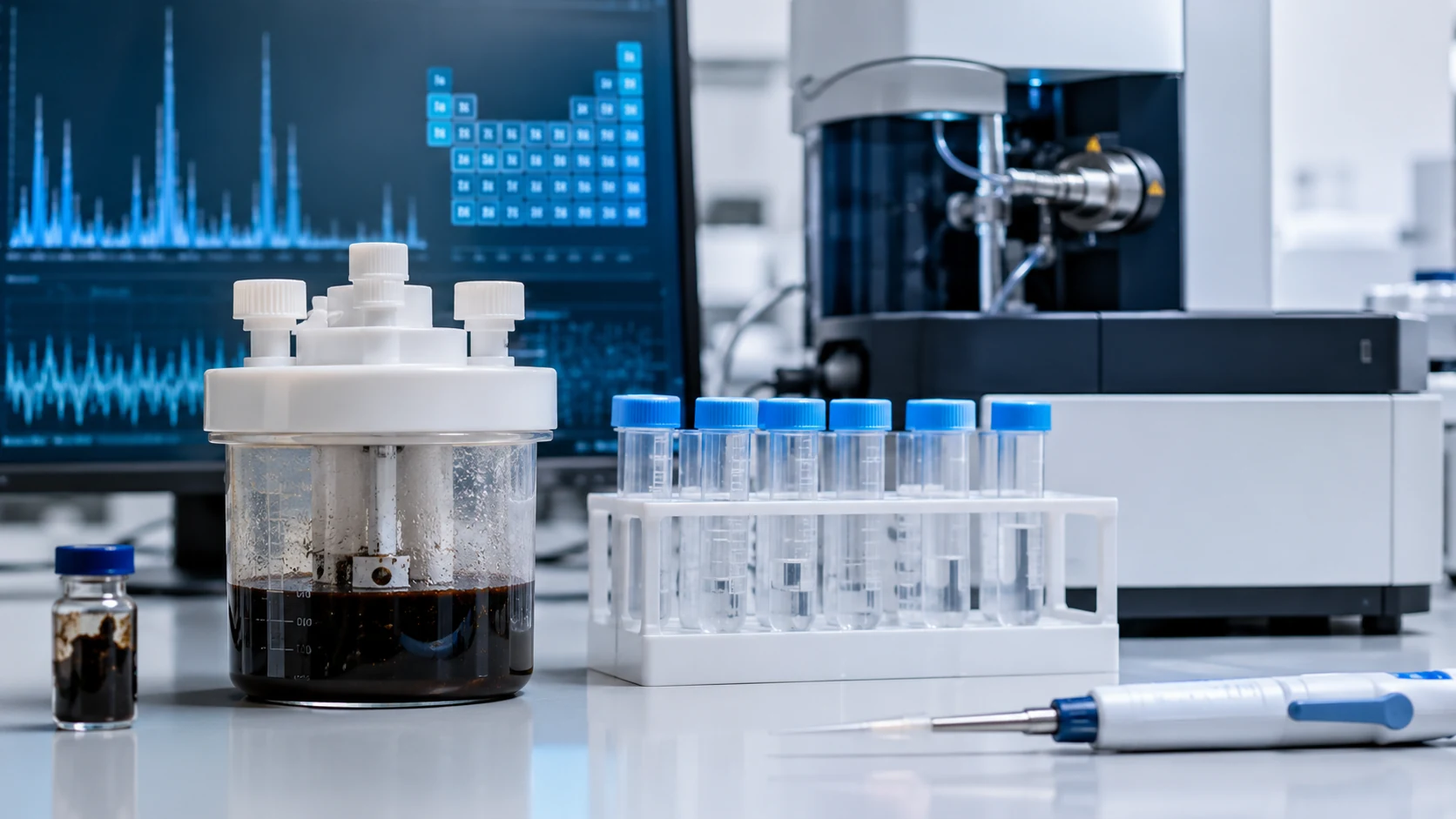
Shilajit can contain naturally occurring elements because it is a mineral-organic material. Analytical studies have reported meaningful variation between samples. The correct conclusion is not that all Shilajit is contaminated or that all tested Shilajit is safe. Risk is batch-specific and depends on concentration, chemical form, serving size and exposure. A useful report should identify the batch, laboratory, method, units, reporting limit and result.
Why Heavy Metals Matter
Lead, arsenic, cadmium and mercury can cause harm when exposure is high enough or sustained.
Their presence cannot be judged by colour, taste, smell, texture or geographic story.
Natural origin does not remove the need for testing. Natural materials can reflect the geology and environment from which they come.
The Four Commonly Requested Metals
Lead, arsenic, cadmium and mercury are common starting points for finished-product testing.
A panel may include additional elements depending on source, process, historical data and regulatory requirements.
A report that omits one of the four common metals is not automatically invalid, but the reason should be understood.
Units Change the Meaning
Results may be reported in milligrams per kilogram, micrograms per kilogram, parts per million or per serving.
These units are not interchangeable without conversion.
Read the unit before comparing products or specifications. A small-looking number can still be misleading if the unit is misunderstood.
Total Arsenic Versus Inorganic Arsenic
Total arsenic measures all forms together. Inorganic arsenic is generally the greater toxicological concern.
A total-arsenic result does not reveal the inorganic fraction. Speciation may be relevant when the total value is elevated or when a market requirement calls for it.
Do not describe a product as arsenic-free when the report only shows below a method reporting limit.
Why Serving Size Matters
A concentration result should be considered alongside the amount consumed.
A value per kilogram does not directly show daily exposure. Exposure per serving can be estimated when the serving weight is known.
This does not make a high concentration acceptable. It means risk interpretation needs both concentration and intake.
Why Method Matters
ICP-MS is widely used for sensitive multi-element analysis.
Other validated methods may also be suitable. The key is whether the method is appropriate for the matrix and target concentration.
The report should identify the method, reporting limit, units and sample.
Detection Limit, Reporting Limit and Zero
Below detection does not mean absolute zero.
It means the analyte was not measured above the method’s detection or reporting threshold.
A strong report states the relevant limit so the reader can understand what below detection means.
What a Test Can and Cannot Prove
A result can show what the laboratory measured in the submitted sample. It may support compliance with a defined specification.
It cannot prove that every batch is identical, that the product is authentic, that no other contaminants exist or that the product is suitable for every person.
A clean metal panel does not prove high fulvic acid, microbiological quality or clinical effectiveness.
Thallium and Emerging Questions
Recent research has drawn attention to thallium in Shilajit and Shilajit supplements.
Thallium is not included in every routine panel. The finding does not mean every product needs every possible element tested on every batch.
It does show why risk assessment should consider source, process, historical results and emerging evidence.
Within specification does not mean FDA approved. Below detection does not mean absolutely absent. One clean report does not prove future batches are clean. A report that cannot be matched to the product does not verify that product. Avoid calling a competitor toxic based on an unverified report or a report that cannot be linked to the named product.
Practical Decision Checklist
Ask for a current batch-specific report.
Confirm lead, arsenic, cadmium and mercury. Check the method, units and reporting limits. Consider inorganic-arsenic speciation when relevant. Match the batch number to the product.
Review the serving size and specification. Ask what happens when a result fails.
Heavy-metal risk is a testing and exposure question, not a visual authenticity test. No batch-specific report means the metal claim cannot be independently verified. A transparent batch report does not prove everything, but it provides a stronger basis for a practical decision.
Frequently asked questions
Editorial disclosure: The platform has commercial relationships with companies involved in Shilajit products. Affiliated and unaffiliated products are evaluated using the same published evidence and quality criteria. This article does not independently verify every product or batch.
Related articles
 Supplements
How Much Shilajit Should You Take? Study Doses, Product Labels and Practical Limits
There is no single evidence-based Shilajit dose for everyone. Human studies most often used 200 mg to 500 mg daily, while one collagen-biomarker trial tested 500 mg and 1,000 mg daily. These doses came from specific purified, processed or standardised preparations. They should not be copied blindly to every resin, capsule, gummy, powder or liquid. A practical dose decision starts with the exact formulation, measured serving, batch quality, study goal and personal health context.
 Supplements
Who Should Not Take Shilajit? Safety Questions That Matter Before You Start
Pregnant or breastfeeding people, children, people taking prescription medicines, those with diagnosed medical conditions, anyone planning surgery, and people with fertility, hormonal, bone-health or persistent-fatigue concerns should not start Shilajit without professional advice. Safety findings from small studies apply only to the tested preparations, doses and durations. Product identity, processing and batch-specific testing also matter.
 Supplements
What Makes Shilajit Safe to Use? A Practical Guide to Batch Testing and COAs
A useful Shilajit quality file links a real batch to a named laboratory, test date, methods, units and measured results. A generic certificate, old report or marketing badge does not verify the jar in your hand. Heavy metals, microbiology, formulation identity and claimed composition should be interpreted together. One result applies only to the tested sample or batch.