High HbA1c but Normal Blood Sugar Readings: What Is Going On?
Home glucose looks fine but the lab HbA1c is 6.5%? Post-meal spikes, dawn phenomenon, anaemia, and haemoglobin variants can all cause this paradox.
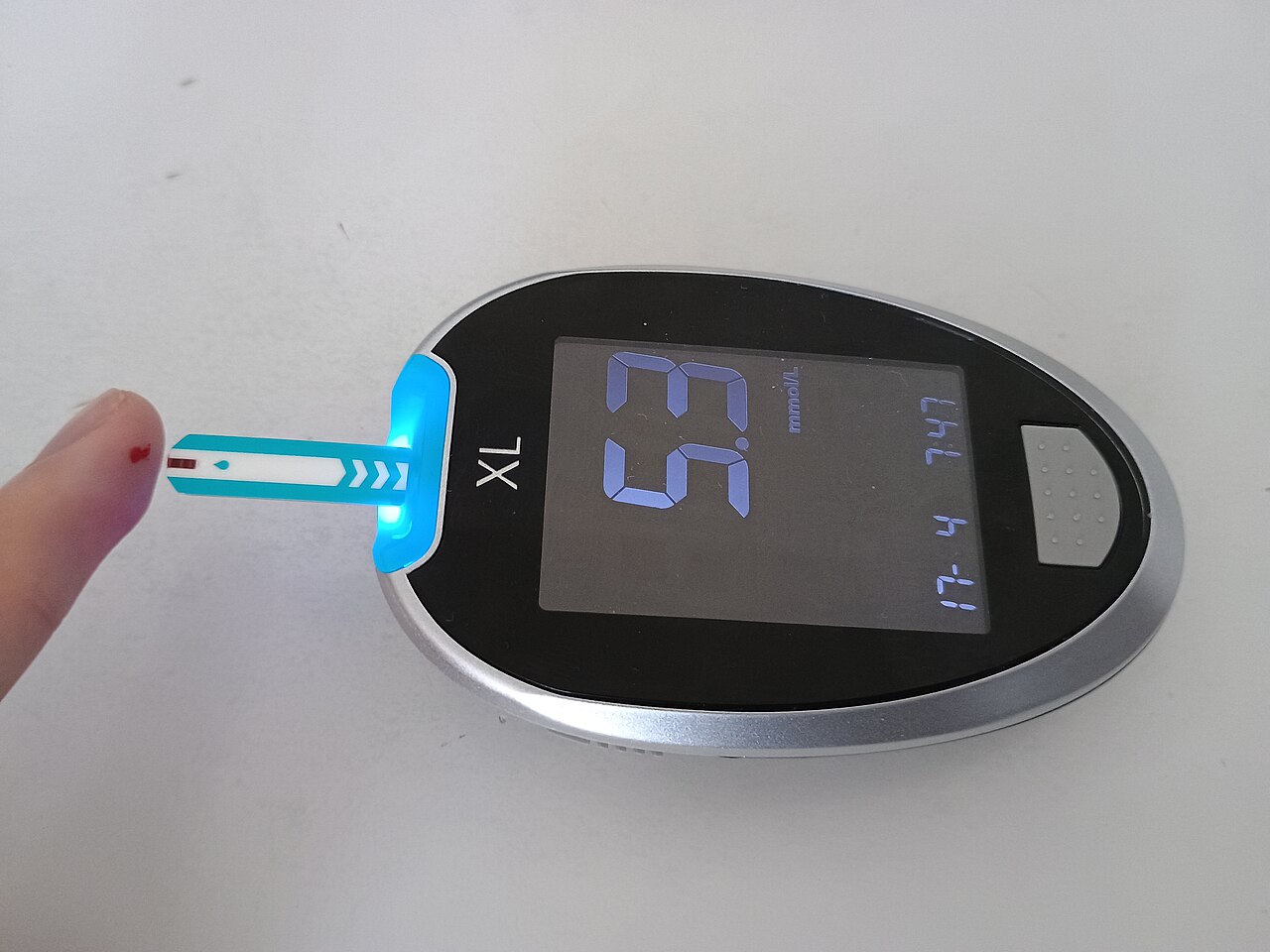
HbA1c reflects your average blood sugar over 2–3 months, while fasting readings are single snapshots. The two can disagree when you have post-meal spikes (most common), dawn-phenomenon rises overnight, an unusual red-cell lifespan (iron deficiency, splenectomy), or a haemoglobin variant that biases the test. The next best step is a continuous glucose monitor for 10–14 days.
HbA1c reflects average blood glucose over 90 days while fasting glucose is a single snapshot. High HbA1c with normal fasting glucose usually indicates undetected post-meal spikes, dawn phenomenon, or a shift in red-cell lifespan from iron or B12 deficiency. A 10–14-day continuous glucose monitor is the highest-yield next test.
- HbA1c measures
- Average glucose over ~90 days
- Fasting glucose measures
- Blood glucose at that instant
- Most common cause of discrepancy
- Undetected post-meal spikes
- Best confirmatory test
- Continuous glucose monitor (10–14 days)
The two tests answer different questions
HbA1c is measured on red blood cells, which live about 120 days. Glucose sticks to haemoglobin proportionally to how much glucose has been circulating. So the HbA1c integrates your glucose exposure across the whole life of the red cells — with the most recent 30 days weighted heaviest.
Fasting glucose is a single reading, usually taken after an 8-hour fast. It tells you your baseline. It says nothing about what happens after breakfast, lunch, or dinner. Two people with the same fasting glucose can have wildly different HbA1cs if one spikes to 220 after every meal and the other stays flat.
Why HbA1c can be high while fasting glucose is normal
| Cause | Mechanism | How to spot it |
|---|---|---|
| Post-prandial spikes | Glucose rises to 180–260 after meals but returns to normal by fasting | CGM or 2-hour post-meal glucose |
| Dawn phenomenon | Cortisol / growth hormone raise glucose 3–8 AM | CGM showing overnight rise |
| Iron deficiency anaemia | Older red cells accumulate more glucose → falsely high HbA1c | CBC + iron studies |
| Haemoglobin variants (HbS, HbC, HbE) | Assay interference — falsely high or low HbA1c | Haemoglobin electrophoresis |
| B12 or folate deficiency | Similar mechanism to iron deficiency | B12, folate, MCV |
| Splenectomy or chronic kidney disease | Prolonged red-cell survival raises HbA1c independently | Clinical history |
| Recent transfusion | Introduces cells with different glycation | Transfusion history |
Dawn phenomenon and the Somogyi effect
Between about 3 and 8 AM, cortisol, growth hormone, and glucagon all rise to prepare the body for waking. They also push glucose up. In healthy people, insulin rises alongside them and glucose stays flat. In pre-diabetes, insulin is a step behind, and morning glucose creeps into the 110–130 range. If you check fasting glucose at 10 AM after breakfast, you never see it. HbA1c does.
The Somogyi effect is the mirror image — a nocturnal hypoglycaemia followed by rebound hyperglycaemia. It is less common than dawn phenomenon in type 2 diabetes but common in insulin-treated diabetes. A CGM will distinguish them.
- You have Mediterranean, African, South-East Asian or Middle Eastern ancestry.
- Your HbA1c does not match your CGM data.
- You have known sickle-cell trait, thalassaemia trait, or an abnormal haemoglobin.
- Different labs give consistently different HbA1c values.
A sensible workup path
- 1Fasting normal but HbA1c 5.7–6.4%?Prediabetes with a post-meal pattern is most likely. Ask about a 75g OGTT or a 10–14-day CGM.
- 2HbA1c above 6.5% but fasting normal?Formal diabetes diagnosis needs a second abnormal test (repeat HbA1c or OGTT). Do not ignore it — post-prandial diabetes is still diabetes.
- 3Anaemia present or high MCV / low MCV?Correct iron / B12 / folate and repeat HbA1c after 3 months, or use fructosamine or CGM as an interim measure.
- 4Suspect a haemoglobin variant?Ask for haemoglobin electrophoresis and switch to CGM-based monitoring instead of HbA1c.
Related questions people ask
- Can iron deficiency raise HbA1c?
- What is the dawn phenomenon?
- Is a continuous glucose monitor better than HbA1c?
- Can haemoglobin variants make HbA1c inaccurate?
- How is prediabetes diagnosed?
- Does stress raise HbA1c?
- What is postprandial diabetes?
Frequently asked questions
- HbA1c ≠ single glucose reading. Different tests, different windows.
- Post-meal spikes are the most common cause of "high HbA1c, normal fasting".
- Iron deficiency, B12 deficiency and haemoglobin variants all bias HbA1c.
- A 10–14-day CGM is the highest-yield next test.
- Two abnormal tests are needed for a diabetes diagnosis — do not ignore or over-react to a single number.
References
3 sources- ADAAmerican Diabetes Association Standards of Care
Diagnostic thresholds and testing.
diabetes.org
- Cleveland ClinicHbA1c
Causes of falsely high or low HbA1c.
my.clevelandclinic.org
- NIDDKDiabetes tests
Diagnostic testing overview.
niddk.nih.gov
Evidence Snapshot
This snapshot shows verified evidence records matched to this article. It is not a diagnosis or personal medical advice.
HbA1c reflects average blood glucose over the preceding two to three months because it measures the fraction of haemoglobin that has undergone non-enzymatic glycation across the lifespan of circulating red blood cells.
Limitation. HbA1c does not capture short-term glucose swings, so it can miss significant post-meal peaks and low readings between meals.
Recent illness, significant physical or emotional stress and a high-carbohydrate intake in the day or two before testing can transiently raise a fasting plasma glucose result without reflecting a person's usual metabolic pattern.
Limitation. The exact magnitude and duration of stress- or illness-related glucose elevation vary between individuals and are not defined by a single universal cut-off.
Related articles
 Lab Interpretation
Vitamin D Deficiency: When Low Numbers Actually Matter
A "low" vitamin D result is not always a real deficiency, and not every low result needs treatment. Here is how clinicians actually decide.
 Lab Interpretation
High Ferritin with Low Iron: What the Combination Really Means
Ferritin is not just an iron store — it is also an inflammation marker. High ferritin with low serum iron usually means inflammation-trapped iron, not overload.
 Lab Interpretation
Positive D-Dimer Without a Blood Clot: What It Means and What to Do
D-dimer is sensitive but not specific. Many things raise it besides clots — infection, pregnancy, age, cancer, surgery. Here is how to interpret yours.