Positive D-Dimer Without a Blood Clot: What It Means and What to Do
D-dimer is sensitive but not specific. Many things raise it besides clots — infection, pregnancy, age, cancer, surgery. Here is how to interpret yours.
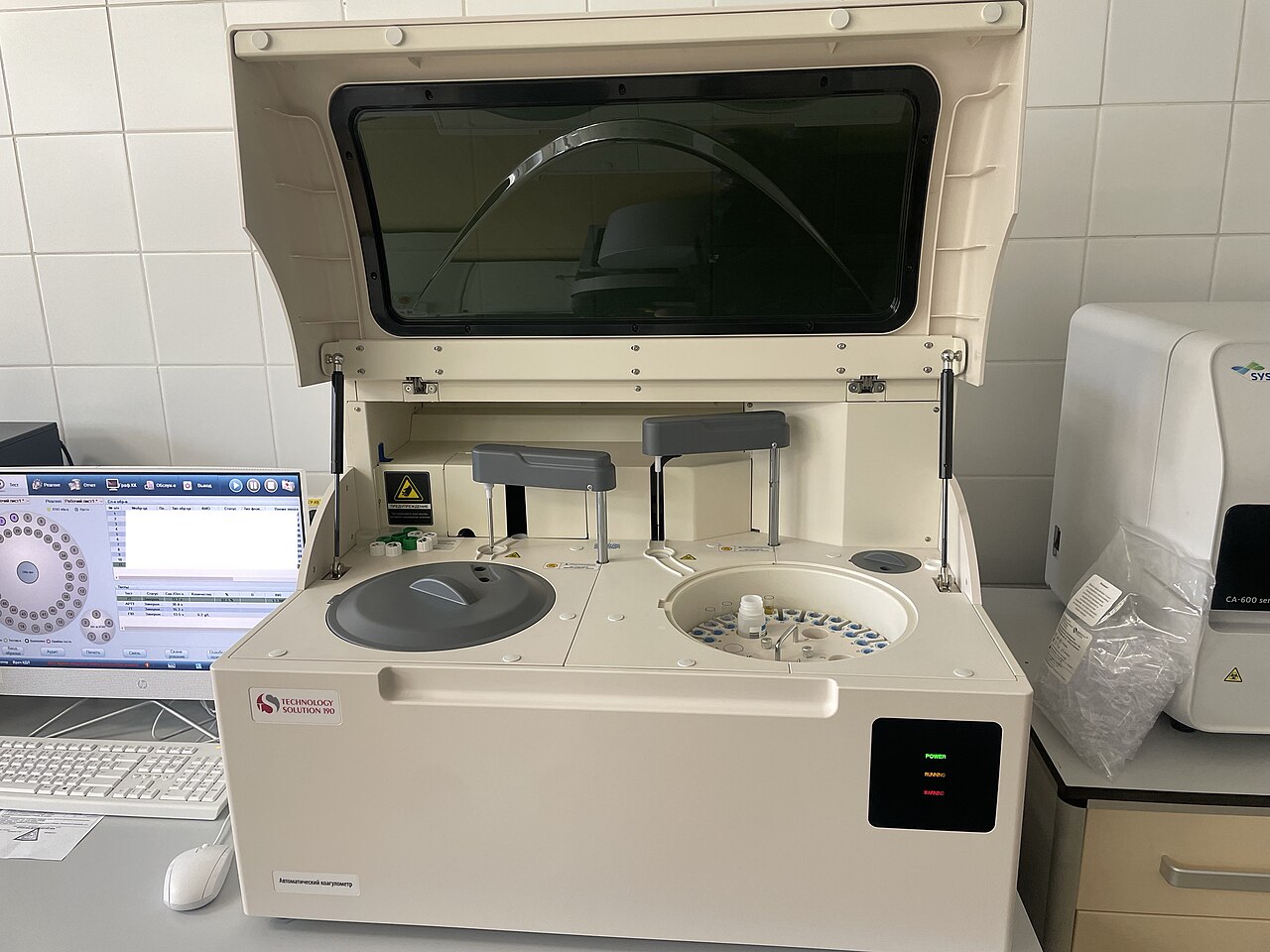
D-dimer is a fibrin breakdown product. It is very sensitive for clot formation but not specific — inflammation, infection, surgery, pregnancy, cancer and old age all raise it. A positive D-dimer only rules a clot IN if imaging confirms one; a negative D-dimer with a low pre-test probability rules a clot OUT. A raised D-dimer without a clot is common and usually reflects an inflammatory or physiological cause.
D-dimer is highly sensitive but not specific for blood clots. Elevated levels are common in inflammation, infection, pregnancy, cancer, surgery, and ageing. Age-adjusted cut-offs (age × 10 μg/L) improve accuracy in patients over 50. A positive D-dimer with negative imaging usually reflects a non-thrombotic inflammatory or physiological cause.
- What it measures
- Fibrin degradation products
- Sensitivity for PE / DVT
- ~95% (rules out low-risk cases)
- Specificity
- ~40–60% (many false positives)
- Age-adjusted cut-off
- Age × 10 μg/L (over 50)
Why D-dimer rises even without a clot
Any process that activates the clotting-and-breakdown cycle can raise D-dimer, even at microscopic levels. Common non-thrombotic causes include recent surgery or trauma, active infection (especially COVID and pneumonia), pregnancy (rises through all three trimesters), inflammation of any kind, cancer, sickle cell disease, liver disease, and simple ageing.
The clinical trick is that D-dimer was designed to be over-sensitive on purpose — you want a test that never misses a clot. The cost is many false positives. This is why guidelines pair D-dimer with a pre-test probability score (Wells or Geneva score) before ordering it.
Non-thrombotic causes of elevated D-dimer
| Cause | Typical magnitude | Comment |
|---|---|---|
| Age > 50 | 1× to 2× the standard cut-off | Use age-adjusted cut-off: age × 10 μg/L |
| Pregnancy | 2× to 4× by 3rd trimester | Standard D-dimer often not useful in pregnancy |
| Recent surgery / trauma | Can be 10× for weeks | Not useful in first 2–4 weeks post-op |
| Infection / sepsis / COVID | 2× to 20× | Correlates with disease severity |
| Cancer | 2× to 5× baseline | Requires more careful workup |
| Chronic inflammation (RA, IBD, CKD) | 1.5× to 3× | Persistently mildly elevated |
| Liver disease | 1.5× to 4× | Impaired clearance |
D-dimer above the standard cut-off is common in these conditions and does not automatically mean a clot.
How clinicians actually use D-dimer
Modern clinical pathways for suspected pulmonary embolism or deep vein thrombosis start with a probability score. In a low-risk patient (Wells ≤ 4 for PE, Geneva score similar), a negative age-adjusted D-dimer effectively rules out the diagnosis. No imaging needed.
In an intermediate or high-risk patient, D-dimer is skipped — the patient goes straight to CT pulmonary angiogram or Doppler ultrasound. This is because in a high-risk patient a positive D-dimer will not change management, and a negative D-dimer would not be reliable enough to rule out.
D-dimer should not be sent for vague symptoms in a low-risk patient. Most positive results in that setting are false positives that trigger unnecessary imaging, radiation, and anxiety. If the D-dimer was ordered without a probability score, it is worth asking why.
What to ask after a positive D-dimer
- 1Was CT pulmonary angiogram or Doppler ultrasound done and negative?Then a clot has been effectively ruled out. The D-dimer elevation is from another cause — usually inflammation, infection, or age.
- 2Was the D-dimer age-adjusted?In patients over 50, use "age × 10 μg/L" as the upper limit. This drops false positives significantly.
- 3Any risk factors for cancer or hidden inflammation?A persistently unexplained D-dimer justifies a broader review — cancer screen if age-appropriate, thorough exam, CRP, LDH.
- 4Are you on hormonal contraception, pregnant, or postpartum?These raise D-dimer physiologically. Interpretation shifts to imaging-first pathways.
Related questions people ask
- Can COVID raise D-dimer without a clot?
- What is the age-adjusted D-dimer cut-off?
- Does pregnancy raise D-dimer?
- How reliable is D-dimer for ruling out pulmonary embolism?
- Can cancer cause a persistently high D-dimer?
- What is the Wells score?
- Should I be on blood thinners if my D-dimer is high?
Frequently asked questions
- D-dimer is highly sensitive but poorly specific.
- Use age-adjusted cut-off (age × 10) in over-50s.
- Positive D-dimer + negative imaging = usually inflammation or ageing.
- D-dimer alone is not a diagnosis and not a blood-thinner indication.
- Pre-test probability + age adjustment reduce false positives dramatically.
References
3 sources- BMJD-dimer interpretation
Age-adjusted D-dimer in clinical practice.
bmj.com
- Wells Score
PE probability scoring.
mdcalc.com
- ESC GuidelinesPulmonary embolism
2019/2024 diagnostic and management pathway.
escardio.org
Evidence Snapshot
This snapshot shows verified evidence records matched to this article. It is not a diagnosis or personal medical advice.
D-dimer can be elevated for many reasons other than a clinically important venous thromboembolism, including recent surgery, trauma, infection, pregnancy, malignancy and increasing age.
Limitation. A raised D-dimer cannot, on its own, identify the underlying cause.
Related articles
 Lab Interpretation
Vitamin D Deficiency: When Low Numbers Actually Matter
A "low" vitamin D result is not always a real deficiency, and not every low result needs treatment. Here is how clinicians actually decide.
 Lab Interpretation
High Ferritin with Low Iron: What the Combination Really Means
Ferritin is not just an iron store — it is also an inflammation marker. High ferritin with low serum iron usually means inflammation-trapped iron, not overload.
 Lab Interpretation
High HbA1c but Normal Blood Sugar Readings: What Is Going On?
Home glucose looks fine but the lab HbA1c is 6.5%? Post-meal spikes, dawn phenomenon, anaemia, and haemoglobin variants can all cause this paradox.