High-Sensitivity CRP: What This Inflammation Test Can Tell You About Heart Risk
Understand what high-sensitivity CRP measures, how it can enhance cardiovascular risk assessment, and why it isn’t specific enough to diagnose heart disease or blocked arteries.
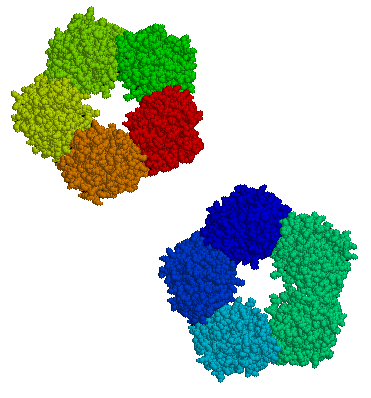
High-sensitivity CRP (hs-CRP) measures a marker of systemic inflammation and, at the low concentrations relevant to cardiovascular risk, is categorized as low risk (under 1 mg/L), average risk (1–3 mg/L), or high risk (above 3 mg/L). It’s used as a risk-enhancing factor that can help refine cardiovascular risk estimates, particularly when a treatment decision is otherwise uncertain — not as a diagnostic test for heart disease. hs-CRP is nonspecific: it rises with infection, injury, and chronic inflammatory conditions unrelated to the heart, and a result drawn during acute illness should not be treated as a stable measure of cardiovascular risk. It cannot detect blocked arteries or diagnose atherosclerosis by itself.
hs-CRP is a highly sensitive smoke detector with no idea where the smoke is coming from. It can pick up very low levels of systemic inflammation that older, standard CRP tests couldn’t detect — useful for cardiovascular risk refinement — but it can’t tell a heart-related signal from a sprained ankle or a sinus infection. Timing and context matter enormously here.
- Cardiovascular risk categories: low (<1 mg/L), average (1–3 mg/L), high (>3 mg/L), per the CDC/AHA framework.
- hs-CRP is a risk-enhancing factor used to refine risk estimates, not a stand-alone diagnostic test for heart disease.
- Results are nonspecific — infection, injury, and chronic inflammatory conditions all raise hs-CRP.
- A result of 10 mg/L or higher usually signals acute inflammation or infection rather than stable cardiovascular risk.
What the test measures
CRP (C-reactive protein) is produced by the liver in response to inflammatory signals throughout the body. Standard CRP assays were originally designed to detect the much higher concentrations seen in acute inflammation and infection. High-sensitivity assays were developed specifically to detect the lower concentrations relevant to the chronic, low-grade inflammation associated with atherosclerosis — a different clinical use case from standard CRP testing for suspected infection.
How the main pattern is interpreted
hs-CRP is most useful in a specific clinical scenario: someone whose calculated 10-year cardiovascular risk sits in an intermediate range where the decision to start or intensify preventive therapy is genuinely uncertain. In that situation, an elevated hs-CRP can shift the risk estimate upward and support a more proactive approach; a low hs-CRP can support a more conservative one. Outside of that intermediate-risk, decision-uncertain scenario, hs-CRP adds comparatively little to risk assessment already established by other factors.
Reference ranges versus cardiovascular-risk thresholds
The CDC/AHA 2003 workshop established the widely used cardiovascular risk tertiles — low risk under 1 mg/L, average risk 1 to 3 mg/L, and high risk above 3 mg/L — based on population distribution data. The 2018 AHA/ACC cholesterol guideline separately references an hs-CRP of 2.0 mg/L or higher as a "risk-enhancing factor" that can favor starting statin therapy when a treatment decision is otherwise uncertain. It’s important to distinguish these cardiovascular-risk-relevant concentrations (generally under 10 mg/L) from the much higher concentrations — 10 to 40 mg/L and above — associated with acute inflammation and infection; these represent fundamentally different clinical contexts, not points on the same risk scale.
What can distort the result
Almost any acute inflammatory process can raise hs-CRP: a common cold, a minor injury, recent dental work, a urinary tract infection, or a flare of a chronic inflammatory condition like rheumatoid arthritis or inflammatory bowel disease. Because of this sensitivity, current guidance generally recommends against interpreting a single hs-CRP drawn during acute illness as reflective of stable cardiovascular risk, and a repeat measurement under calmer conditions is the standard approach when an unexpectedly high result appears.
What the result does not prove
hs-CRP does not diagnose blocked or narrowed arteries, does not confirm the presence of atherosclerosis, and does not identify a specific cardiovascular event risk timeline. It also cannot distinguish cardiovascular-related inflammation from inflammation caused by an unrelated condition — the number itself carries no information about its source.
Common misunderstandings
A common misunderstanding is treating an elevated hs-CRP as evidence of heart disease itself, when it’s a nonspecific inflammatory marker that requires the broader clinical context — including whether it was drawn during illness — to interpret meaningfully. Another misunderstanding is using hs-CRP to track whether a treatment is "working," which current guidance specifically advises against; hs-CRP is not established as a monitoring tool for treatment response.
Practical next-step guidance
If your hs-CRP comes back elevated and you were sick, injured, or dealing with a flare of a chronic condition around the time of testing, a repeat test once you’re feeling well is a reasonable next step before drawing any cardiovascular conclusions. If your cardiovascular risk is otherwise intermediate and uncertain, discussing how an hs-CRP result fits into that broader risk conversation with a clinician is more useful than interpreting the number alone.
- A very high hs-CRP (generally 10 mg/L or above) usually reflects acute inflammation or infection and is a reasonable prompt to investigate that cause specifically, rather than to reclassify cardiovascular risk.
- hs-CRP should not be the sole basis for starting or stopping cardiovascular treatment.
- This article does not recommend medication or treatment based on an hs-CRP result.
Limitations and uncertainty
hs-CRP’s nonspecific nature means it consistently requires clinical context — recent illness, injury, or chronic inflammatory conditions — to interpret meaningfully, and it is not established as a tool for monitoring treatment response over time.
Frequently asked questions
Related articles
 Laboratory Tests
TSH Test: Normal Range, High, Low & What Your Result Actually Means
TSH is the single most important thyroid number. Understand normal ranges by age and pregnancy, what a high or low value really tells you, and the two follow-up tests that clinch the diagnosis.
 Laboratory Tests
HbA1c Test: Normal Range, Prediabetic, Diabetic Cut-offs & How to Lower It
HbA1c reflects your average blood sugar over ~3 months. Understand every threshold — normal, prediabetes, diabetes — and the realistic actions that move the number.
 Laboratory Tests
LDL Cholesterol: Optimal Numbers, High Numbers, and How to Read Yours
LDL is the "bad" cholesterol only if you leave the story there. Understand optimal targets by risk group, the ApoB perspective, and the interventions that actually shift the number.