Positive ANA But No Autoimmune Disease: How to Interpret It
About 15–20% of healthy adults test positive for ANA. Titre, pattern, and symptoms — in that order — decide whether it matters.
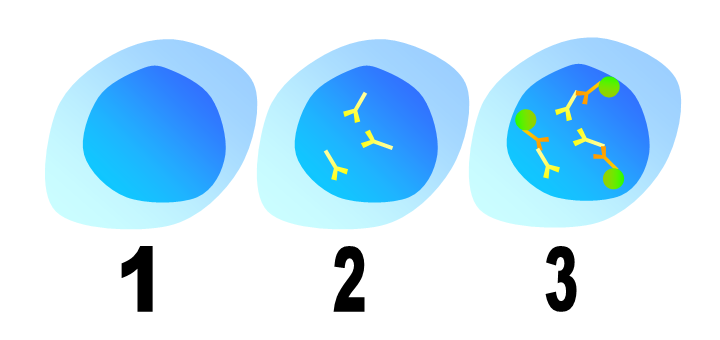
A positive ANA in the absence of symptoms is common — roughly 1 in 6 healthy adults are positive at 1:80, and 1 in 30 at 1:160. A positive ANA alone does not diagnose autoimmune disease. Titre matters (higher = more meaningful), pattern matters (some patterns are more specific), and symptoms matter most. Without joint pain, rash, mouth ulcers, dry eyes, or fatigue with fever, an isolated ANA is rarely worth chasing.
About 15–20% of healthy adults test positive for ANA at 1:80 titre. A positive ANA alone does not diagnose autoimmune disease. Titre, staining pattern, and symptoms drive interpretation — higher titres, specific patterns like centromere or nucleolar, and clinical features such as joint pain or rash raise clinical significance. Isolated low-titre ANA rarely needs workup.
- Healthy adult false-positive rate
- ~15–20% at 1:80 titre
- Meaningful titre threshold
- ≥ 1:320 or specific pattern
- What changes interpretation
- Symptoms, then pattern, then ENA panel
- Key follow-up
- ENA panel + clinical review
What the ANA actually detects
ANA is an umbrella test — it detects any antibody that binds to structures in the cell nucleus. Many are meaningless. Some point to specific diseases: anti-dsDNA and anti-Sm are highly specific for lupus, anti-Scl-70 for scleroderma, anti-Jo-1 for polymyositis, anti-SSA/SSB for Sjögren’s.
That is why a positive ANA is usually followed up with an ENA (extractable nuclear antigen) panel — to identify the specific antibody, if any. A positive ANA with a negative ENA is very common and usually reassuring.
ANA titre and pattern interpretation
| Titre / Pattern | Likelihood of clinical significance |
|---|---|
| 1:40 or 1:80, no symptoms | Very low — usually meaningless |
| 1:160, no symptoms | Low — repeat in 6 months if symptoms develop |
| 1:320 or higher | Moderate — worth a rheumatology review |
| Homogeneous or speckled, no symptoms | Common, low specificity |
| Centromere pattern | Specific for limited scleroderma / CREST |
| Nucleolar pattern | Specific for scleroderma |
| Anti-dsDNA positive | Highly specific for lupus |
When symptoms tip the scale
A low-titre ANA in a well person is background noise. The same low titre in someone with new joint pain, malar rash, mouth ulcers, persistent unexplained fever, or Raynaud’s becomes a signal that needs specialist attention.
Rheumatologists use classification criteria (2019 EULAR/ACR for lupus, ACR/EULAR 2010 for RA) that require multiple domains — not just a positive ANA. A single positive antibody is never enough.
- Joint pain and swelling in the same joints on both sides.
- Persistent rash worsened by sun, especially on cheeks.
- Recurrent mouth ulcers.
- Dry eyes and mouth for months.
- Raynaud’s (fingers turning white or blue in the cold).
- Unexplained fever with fatigue.
Sensible next steps
- 1ANA positive at 1:40 or 1:80, no symptoms?No further testing needed. Live your life. Repeat only if symptoms develop.
- 2ANA 1:160 with mild symptoms?Order ENA panel + inflammation markers. Watchful follow-up.
- 3ANA ≥ 1:320 or specific pattern (centromere, nucleolar)?Rheumatology referral. Full autoimmune workup including ENA, complement (C3, C4), anti-dsDNA, urinalysis.
- 4Specific antibody positive (dsDNA, Sm, Scl-70, Jo-1)?These are disease-specific. Rheumatology assessment is essential.
Related questions people ask
- Is a positive ANA at 1:80 dangerous?
- Which drugs cause a positive ANA?
- What is anti-dsDNA?
- Can infections cause a positive ANA?
- What is the difference between ANA and ENA?
- Do I need annual ANA testing?
- What symptoms need a rheumatologist review?
Frequently asked questions
- Positive ANA at low titre is common and usually meaningless.
- Titre, pattern, and specific antibodies each matter more than the umbrella "positive/negative" result.
- Symptoms decide relevance — no symptoms + low titre = no workup.
- Never diagnose lupus or any autoimmune disease from ANA alone.
References
2 sources- ACRANA guidance
ANA testing indications and interpretation.
rheumatology.org
- EULAR/ACR 2019 SLE Classification
Lupus classification criteria.
ard.bmj.com
Related articles
 Lab Interpretation
Vitamin D Deficiency: When Low Numbers Actually Matter
A "low" vitamin D result is not always a real deficiency, and not every low result needs treatment. Here is how clinicians actually decide.
 Lab Interpretation
High Ferritin with Low Iron: What the Combination Really Means
Ferritin is not just an iron store — it is also an inflammation marker. High ferritin with low serum iron usually means inflammation-trapped iron, not overload.
 Lab Interpretation
High HbA1c but Normal Blood Sugar Readings: What Is Going On?
Home glucose looks fine but the lab HbA1c is 6.5%? Post-meal spikes, dawn phenomenon, anaemia, and haemoglobin variants can all cause this paradox.