AMH (Anti-Müllerian Hormone): Ovarian Reserve Test Explained
AMH gives the best single-number estimate of ovarian reserve — but does not predict natural fertility. Learn what a low, normal, or high AMH really means.
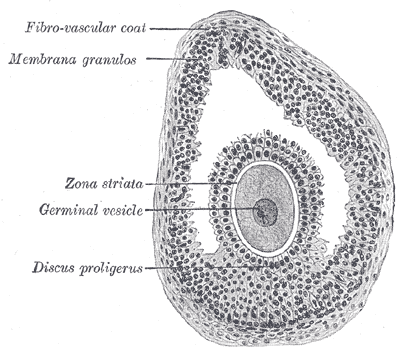
AMH reflects the size of the ovarian follicle pool. Values fall with age — from ~4–6 ng/mL in the mid-20s to < 1 ng/mL near menopause. AMH is useful for predicting IVF response and supporting a PCOS diagnosis, but it is a poor predictor of natural fertility. A low AMH does NOT mean you cannot conceive naturally.
AMH is produced by granulosa cells of small growing follicles and gives the best available estimate of ovarian reserve — the size of the remaining follicle pool. Values decline with age; menopausal AMH is < 0.1 ng/mL. High AMH (> 5 ng/mL) supports PCOS diagnosis (Rotterdam criteria include AMH as an ultrasound-alternative in updated 2023 international guideline). Low AMH predicts poor IVF response and helps individualise stimulation protocols. Crucially, AMH does NOT predict natural pregnancy chance in women trying to conceive — cycle-based fertility is preserved until close to menopause. Ordering AMH for reassurance about natural fertility risks anxiety without benefit.
- Best use
- Ovarian reserve for IVF; PCOS diagnosis
- Poor predictor of
- Natural conception
- Menopausal AMH
- < 0.1 ng/mL
- PCOS support
- AMH > 5 ng/mL
- Cycle timing
- Any day — no cycle dependence
AMH by age (approximate reference range)
AMH varies widely, but typical central values by age: 25 y ~4–6 ng/mL, 30 y ~3–5, 35 y ~2–4, 40 y ~0.8–2, 45 y < 1. Ethnicity, smoking, and BMI shift the curve. Interpret with clinical context, not against a single cut-off.
AMH categories and interpretation
| AMH (ng/mL) | Category | Meaning |
|---|---|---|
| < 1 | Low | Diminished ovarian reserve; poor IVF response predicted |
| 1 – 3.5 | Normal | Typical for age 30–40 |
| > 3.5 | High | Good IVF response predicted; investigate PCOS |
| > 5 | Very high | Supports PCOS diagnosis |
When AMH is worth testing
IVF planning: predicts ovarian response and guides gonadotrophin dose to minimise hyperstimulation.
Suspected PCOS: 2023 International PCOS Guideline allows AMH as an alternative to ultrasound follicle count for the "polycystic ovarian morphology" criterion (in adults, > 3 years post-menarche).
Fertility preservation counselling before chemotherapy or ovarian surgery.
Suspected premature ovarian insufficiency (persistently low AMH + elevated FSH + irregular periods).
When AMH is misleading
General fertility screening in women trying naturally: AMH does NOT predict natural monthly pregnancy chance. A woman with AMH 0.8 can still conceive naturally; a woman with AMH 5 has no guarantee. Age remains the strongest single predictor.
On hormonal contraception: some formulations suppress AMH by 20–30%. Interpret cautiously.
- Persistently low AMH + irregular or absent periods in a woman < 40 — premature ovarian insufficiency workup.
- Very high AMH + irregular cycles + hirsutism or acne — PCOS diagnostic workup.
- AMH concerning + trying to conceive > 6 months at age > 35 — fertility referral.
AMH workup
- 1Planning IVF?AMH guides stimulation protocol.
- 2Suspected PCOS?AMH > 5 supports diagnosis alongside cycle irregularity and hyperandrogenism.
- 3Trying naturally?AMH is not helpful. Focus on age, cycle regularity, partner semen analysis.
- 4Low AMH + irregular periods < 40?FSH, oestradiol, TSH, prolactin. Endocrinology or fertility referral.
Related questions people ask
- Does AMH predict natural fertility?
- What is a normal AMH by age?
- Is AMH useful for PCOS diagnosis?
- Does contraception affect AMH?
- How is TSH related to fertility?
- What about thyroid antibodies in fertility?
- How does male testosterone relate to fertility?
Frequently asked questions
- AMH reflects ovarian reserve, not natural fertility.
- Falls with age — under 1 ng/mL is diminished reserve.
- Above 5 ng/mL supports PCOS.
- Best use: IVF planning + PCOS diagnosis.
- Cycle day does not matter.
- Do not use AMH to reassure or scare women trying naturally.
References
3 sources- ESHREOvarian Stimulation Guidelines
European fertility society.
eshre.eu
- ASRMTesting and Interpreting Measures of Ovarian Reserve
US fertility society.
asrm.org
- International PCOS Guideline 2023
PCOS diagnostic consensus.
monash.edu
Related articles
 Laboratory Tests
TSH Test: Normal Range, High, Low & What Your Result Actually Means
TSH is the single most important thyroid number. Understand normal ranges by age and pregnancy, what a high or low value really tells you, and the two follow-up tests that clinch the diagnosis.
 Laboratory Tests
HbA1c Test: Normal Range, Prediabetic, Diabetic Cut-offs & How to Lower It
HbA1c reflects your average blood sugar over ~3 months. Understand every threshold — normal, prediabetes, diabetes — and the realistic actions that move the number.
 Laboratory Tests
LDL Cholesterol: Optimal Numbers, High Numbers, and How to Read Yours
LDL is the "bad" cholesterol only if you leave the story there. Understand optimal targets by risk group, the ApoB perspective, and the interventions that actually shift the number.