Cervical Screening Explained: HPV Test, Smear and Colposcopy
Cervical screening now leads with HPV testing. Learn NHS/USPSTF ages, HPV genotypes, and what a colposcopy result means.
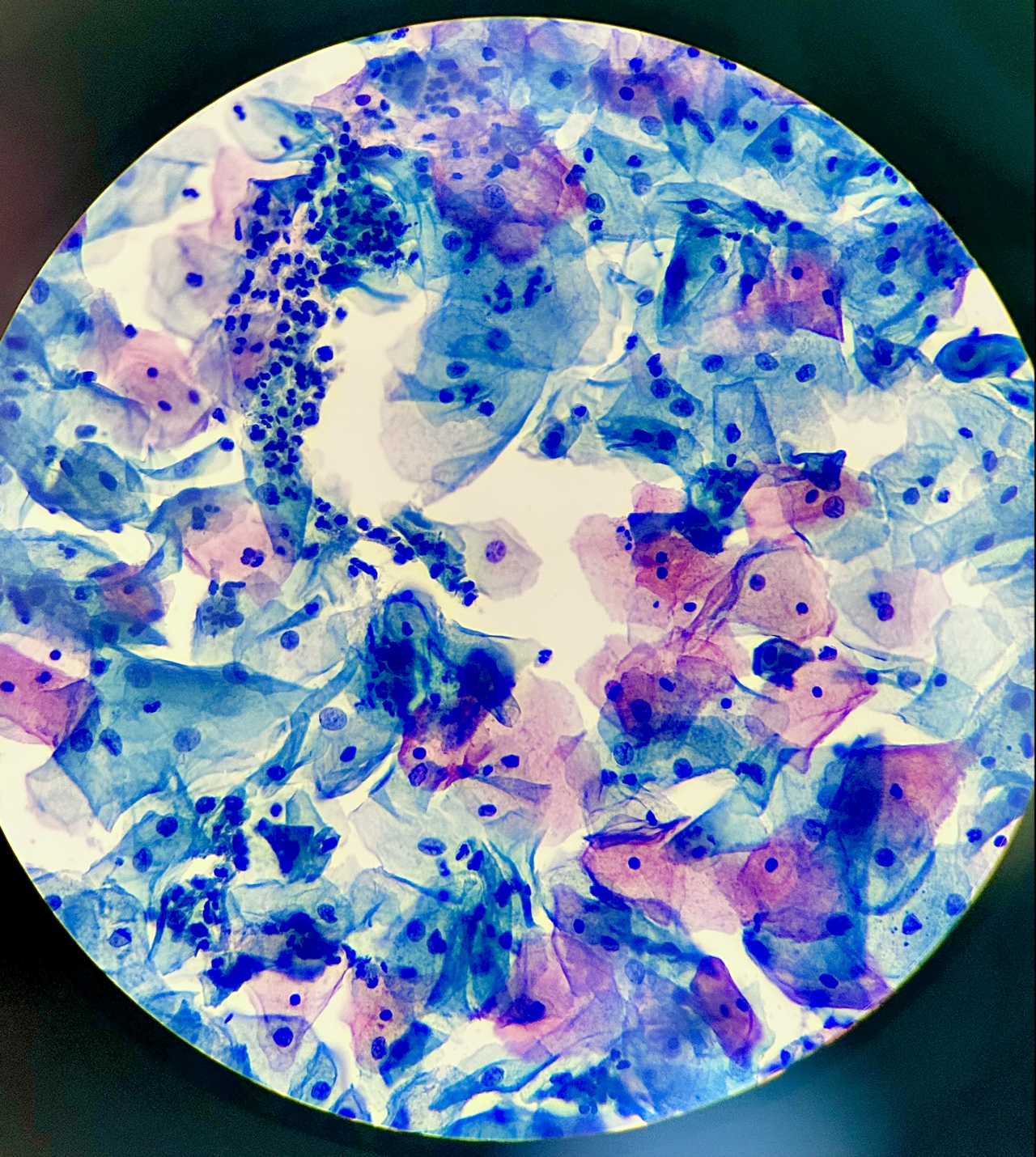
Cervical screening now uses HPV testing as the primary test — cytology (smear) is done only if HPV is positive. The NHS invites women 25–64: 25–49 every 3 years, 50–64 every 5 years (Wales/Scotland extend to 5-yearly). USPSTF 2018 options: HPV alone every 5 y from 25 or 30; co-testing every 5 y; cytology alone every 3 y. HPV 16/18 confers highest risk and typically triggers direct colposcopy.
HPV-primary screening is now the international standard because persistent high-risk HPV infection is a necessary cause of cervical cancer. NHS England moved to 5-yearly screening for women 25–49 in 2024 (aligning with Wales/Scotland) after evidence showed no increase in cancer risk with the longer interval when HPV negative. Positive HPV samples are reflex-tested with liquid-based cytology (LBC); LBC low-grade abnormalities or persistent HPV lead to colposcopy. Colposcopy grades cervical intraepithelial neoplasia (CIN): CIN1 (mild dysplasia, usually regresses), CIN2 (moderate — often treated, esp. persistent), CIN3 (severe — treated with LLETZ/cone). HPV 16/18 (the highest-oncogenic genotypes) commonly triggers direct colposcopy even with normal cytology because 70% of cervical cancers are HPV 16/18. Self-sampling for HPV is an evidence-based alternative and increasingly offered (WHO endorsed 2021). HPV vaccination (Gardasil 9) programme has halved CIN3+ incidence in vaccinated cohorts (UK Nature 2021). Screening is being safely extended for HPV-vaccinated women in some programmes.
- Primary test
- HPV DNA
- NHS interval
- 25–49 every 5 y; 50–64 every 5 y (2024 update)
- Highest-risk types
- HPV 16, 18
- Vaccinated women
- Screening still recommended
- Colposcopy triggers
- HPV 16/18 pos; HPV+ cytology abnormality
CIN grades + management
| CIN grade | Meaning | Action |
|---|---|---|
| CIN1 | Mild dysplasia | Usually observation; regresses in 60% |
| CIN2 | Moderate dysplasia | LLETZ or observation in young women |
| CIN3 | Severe dysplasia | LLETZ / cone biopsy |
| AIS | Adenocarcinoma in situ | Cone biopsy + follow-up |
Colposcopy day
Speculum + acetic acid (turns abnormal areas white) + iodine.
Punch biopsies of suspicious areas.
LLETZ (large-loop excision of the transformation zone) can be done same-visit for high-grade.
Post-procedure light bleeding for up to 4 weeks; abstain from tampons/intercourse.
- Postcoital or intermenstrual bleeding — gynaecology assessment, not simple screening.
- Very heavy bleeding after LLETZ — return to the treating unit.
- Persistent postmenopausal bleeding — TVUS + gynaecology.
HPV-primary pathway
- 1HPV negative?Return to routine 5-year screen.
- 2HPV positive, cytology normal?Repeat in 12 months (or direct colposcopy for HPV 16/18 in some regions).
- 3HPV positive + cytology abnormal?Colposcopy.
- 4CIN2/3 confirmed?LLETZ + follow-up.
Related questions people ask
Frequently asked questions
- HPV testing is now the primary screening test.
- Cytology is a reflex test on HPV-positive samples.
- HPV 16/18 confer highest risk.
- Vaccinated women still need screening.
- Self-sampling is a validated alternative.
References
2 sources- NHS Cervical Screening Programme
UK national programme.
gov.uk
- USPSTFCervical Cancer Screening (2018)
US Preventive Services Task Force.
uspreventiveservicestaskforce.org
Related articles
 Imaging & Diagnostic Tests
Chest X-ray Explained: What It Shows, When You Need One, and Radiation Dose
A chest X-ray delivers a chest radiation dose equivalent to a few days of background radiation. Learn what it detects and what it misses.
 Imaging & Diagnostic Tests
CT Head Scan Explained: When It Is Needed for Stroke, Trauma and Headache
A non-contrast CT head is the first imaging test in stroke and head trauma. Learn NICE criteria, radiation dose, and what CT misses.
 Imaging & Diagnostic Tests
CTPA (CT Pulmonary Angiogram) Explained: Diagnosing Pulmonary Embolism
CTPA is the reference standard for pulmonary embolism. Learn indications, radiation dose, contrast risks, and pregnancy alternatives.