Creatinine and eGFR: What These Kidney Function Results Mean Together
Understand what creatinine and estimated GFR (eGFR) measure, why eGFR is a calculated estimate rather than a direct measurement, and why one result cannot diagnose chronic kidney disease on its own.
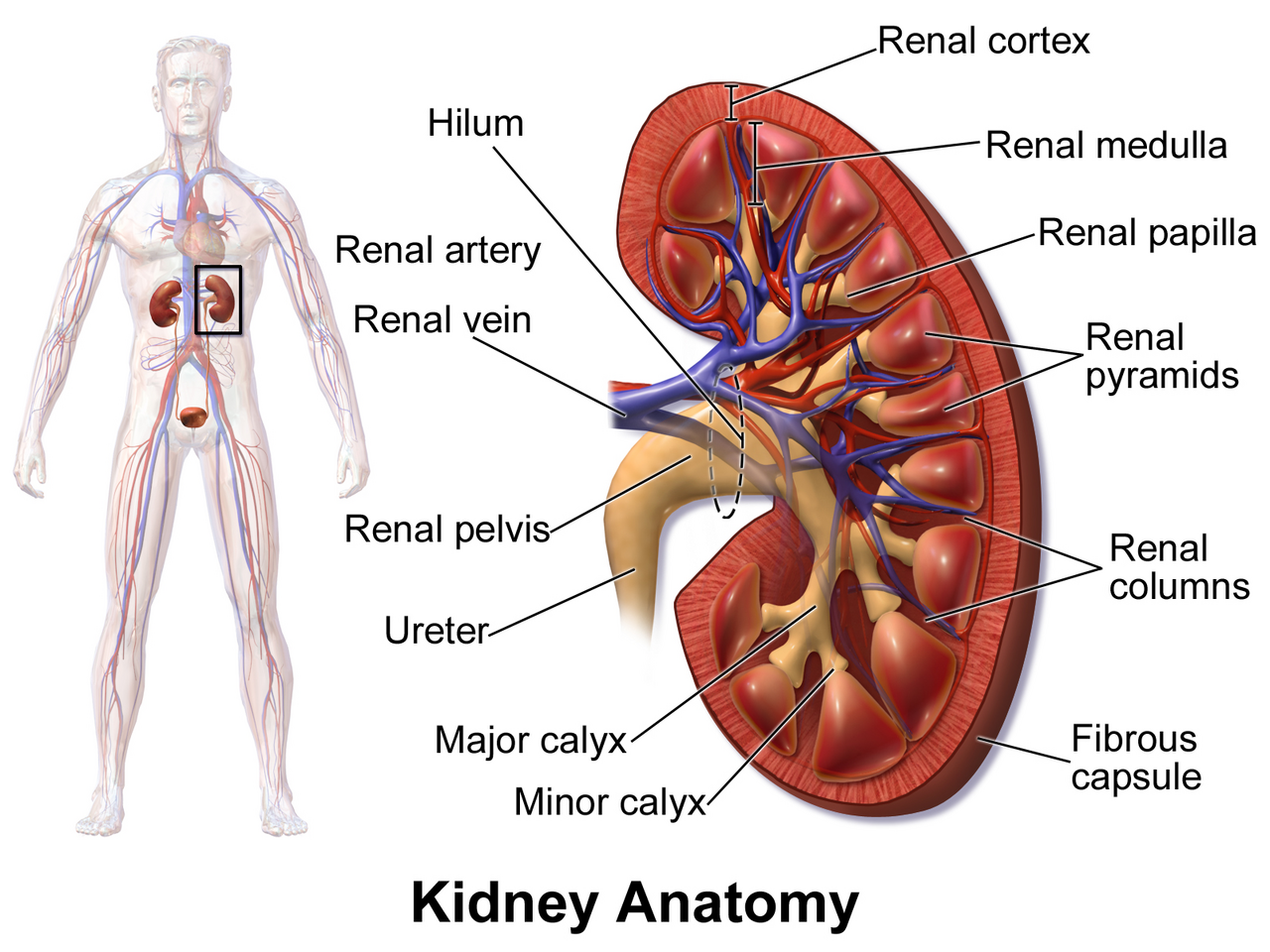
Creatinine is a waste product measured directly in a blood sample, and eGFR (estimated glomerular filtration rate) is a calculated estimate of how efficiently your kidneys are filtering waste, derived from your creatinine level combined with age and sex. A single low eGFR can reflect genuinely reduced kidney filtration, but it can equally reflect low muscle mass, dehydration at the time of the blood draw, certain medicines, or recent illness — none of which indicate permanent kidney damage. Chronic kidney disease is never diagnosed from one result: current guidelines require abnormal kidney structure or function to persist for at least three months, generally confirmed through repeat testing or an additional marker such as urine albumin.
Creatinine and eGFR are often treated as interchangeable, but they're not the same thing. Creatinine is the raw measurement; eGFR is a formula's best guess at what that measurement means for your actual filtration rate, adjusted for the fact that people with more muscle naturally produce more creatinine. A single eGFR in the 50s or 60s isn't an emergency and isn't automatically a diagnosis — it's a prompt to look at the pattern over time and alongside other markers.
- eGFR is calculated from creatinine, age and sex — it is an estimate, not a direct measurement of filtration.
- Muscle mass, hydration, diet and medicines can all shift creatinine without reflecting true kidney function change.
- Chronic kidney disease requires abnormal findings to persist for at least three months, per KDIGO 2024.
- A change in eGFR greater than 20% between two tests is considered more clinically significant than the absolute number alone.
What the test measures
Creatinine is a breakdown product of creatine, a compound found mainly in muscle tissue. It's produced at a fairly steady rate and normally cleared from the blood by the kidneys, which is why blood creatinine rises when filtration slows down. Because muscle mass drives how much creatinine is produced in the first place, two people with identical kidney function can have different creatinine levels simply because one has more muscle than the other.
eGFR takes creatinine and adjusts it using an equation that also factors in age and sex, producing a number expressed in mL/min/1.73m² that approximates how many milliliters of blood your kidneys filter per minute. The most widely used current formula is the CKD-EPI 2021 creatinine equation, which removed a prior race-based adjustment. eGFR is reported by nearly every routine metabolic panel once creatinine is measured, but it remains an estimate — not a direct measurement of glomerular filtration.
How the main pattern is interpreted
Guidelines classify eGFR into categories: G1 (90 or above), G2 (60–89), G3a (45–59), G3b (30–44), G4 (15–29), and G5 (below 15), each reflecting progressively lower estimated filtration. These categories describe severity once kidney disease is established — they are not, by themselves, a diagnosis. A single eGFR of 55 mL/min/1.73m² sits in the G3a range, but whether that reflects chronic kidney disease depends on whether it persists, and whether other markers of kidney damage, such as albumin in the urine, are also present.
The KDIGO 2024 guideline explicitly frames CKD diagnosis around persistence and pattern rather than a single number: kidney disease is classified using cause, GFR category, and albuminuria category together, a framework often called CGA. A low eGFR with completely normal urine albumin over three months tells a different story than the same eGFR with significantly elevated albumin — the latter combination generally reflects a more active and progressive process.
Reference ranges versus diagnostic thresholds
An eGFR reference range isn't really a fixed number the way a sodium or potassium range is — it's a category system built around risk. Under KDIGO 2024, an eGFR of 90 or above with no other markers of kidney damage is not classified as CKD at all. An eGFR below 60 mL/min/1.73m², if it persists for three months or longer, is one of the two core criteria used to define chronic kidney disease (the other being persistent albuminuria at or above 30 mg/g, even with a normal eGFR).
It's worth being precise about chronicity here: a single eGFR reading below 60 does not establish CKD. The guideline specifically notes that diagnosis cannot be made on single testing and generally requires either repeat testing over time or, in cases of suspected advanced disease, more immediate evaluation.
What can distort the result
Recent intense exercise, high dietary meat or protein intake shortly before testing, and certain supplements (including some creatine products) can raise creatinine without any change in true kidney filtration. Dehydration can also raise creatinine temporarily by concentrating the blood. On the other end, low muscle mass — common with aging, chronic illness, or limb amputation — can produce a creatinine that looks reassuringly low even when true filtration has declined, because eGFR formulas assume a fairly typical muscle mass for a given age and sex.
Certain medicines, including trimethoprim and some other drugs, can raise creatinine by blocking its tubular secretion without actually reducing glomerular filtration — a distinction that matters clinically but isn't visible from the number alone.
What the result does not prove
A single low eGFR does not, by itself, diagnose chronic kidney disease, and it does not distinguish a temporary dip (from dehydration, illness, or a medicine effect) from a persistent decline. It also doesn't identify the underlying cause of reduced filtration if one is present — diabetes, high blood pressure, and many other conditions can all lead to a similar eGFR pattern through very different mechanisms.
Common misunderstandings
A common misunderstanding is treating eGFR as a precise, direct measurement rather than a population-based estimate — it can meaningfully over- or under-estimate true filtration in people with atypical muscle mass, such as bodybuilders or people with muscle-wasting illness. Another misunderstanding is assuming any eGFR below 90 signals kidney disease; eGFR naturally declines somewhat with age in many people without this necessarily representing disease, which is part of why chronicity and additional markers matter so much in the diagnostic framework.
Practical next-step guidance
If your eGFR comes back mildly reduced for the first time, a reasonable next step is usually a repeat test after addressing obvious contributing factors — staying well hydrated, avoiding intense exercise beforehand, and reviewing medicines with a clinician — rather than assuming a diagnosis. Checking urine albumin-to-creatinine ratio (uACR) alongside a repeat eGFR gives a fuller picture, since the combination of both values is what current guidelines use to classify kidney disease risk. If eGFR has dropped by more than 20% compared to a prior result, or is very low, prompt clinical review is more appropriate than a routine follow-up.
- A drop in eGFR of more than 20% between two tests is treated by current guidance as exceeding expected day-to-day variability and generally warrants evaluation. A very low eGFR, particularly under 15 mL/min/1.73m², or eGFR decline accompanied by reduced urination, swelling, or confusion, is a different and more urgent situation than a stable, mildly reduced eGFR, and deserves prompt clinical attention.
Limitations and uncertainty
eGFR remains an estimate rather than a direct filtration measurement, and its accuracy is reduced at extremes of muscle mass or body size. A diagnosis of chronic kidney disease requires more than one data point — persistence over at least three months, plus consideration of albuminuria — which this article intentionally does not shortcut into a single-result verdict.
Frequently asked questions
Evidence Snapshot
This snapshot shows verified evidence records matched to this article. It is not a diagnosis or personal medical advice.
Blood urea nitrogen (BUN) can rise from dehydration, high dietary protein intake and gastrointestinal bleeding independently of kidney filtration, which is why BUN is generally interpreted alongside creatinine and eGFR rather than alone.
Limitation. A single BUN value cannot distinguish a prerenal cause (reduced blood flow to the kidneys) from an intrinsic kidney problem without additional context.
Related articles
 Kidney Function & Electrolytes
BUN Blood Test Explained: What High and Low Results Can Mean
Learn what blood urea nitrogen (BUN) measures, why it can rise for reasons unrelated to kidney filtration, and why the BUN-to-creatinine ratio adds context a single BUN value can't.
 Kidney Function & Electrolytes
Urine Albumin-to-Creatinine Ratio: An Early Kidney-Damage Test Explained
Learn why urine albumin-to-creatinine ratio (uACR) can detect kidney damage before eGFR falls, how the A1/A2/A3 categories work, and what can cause a falsely elevated result.
 Kidney Function & Electrolytes
Cystatin C Blood Test: When It Adds Useful Information Beyond Creatinine
Learn what cystatin C measures, why it's less affected by muscle mass than creatinine, and when guidelines recommend using it to confirm a borderline eGFR result.