HDL Cholesterol: Why Higher Is Not Always Better — Low, Normal and High Explained
The "good" cholesterol story is more nuanced than every heart-health article tells you. Understand what HDL actually does, why very high HDL is not protective, and which lifestyle changes actually shift the number.
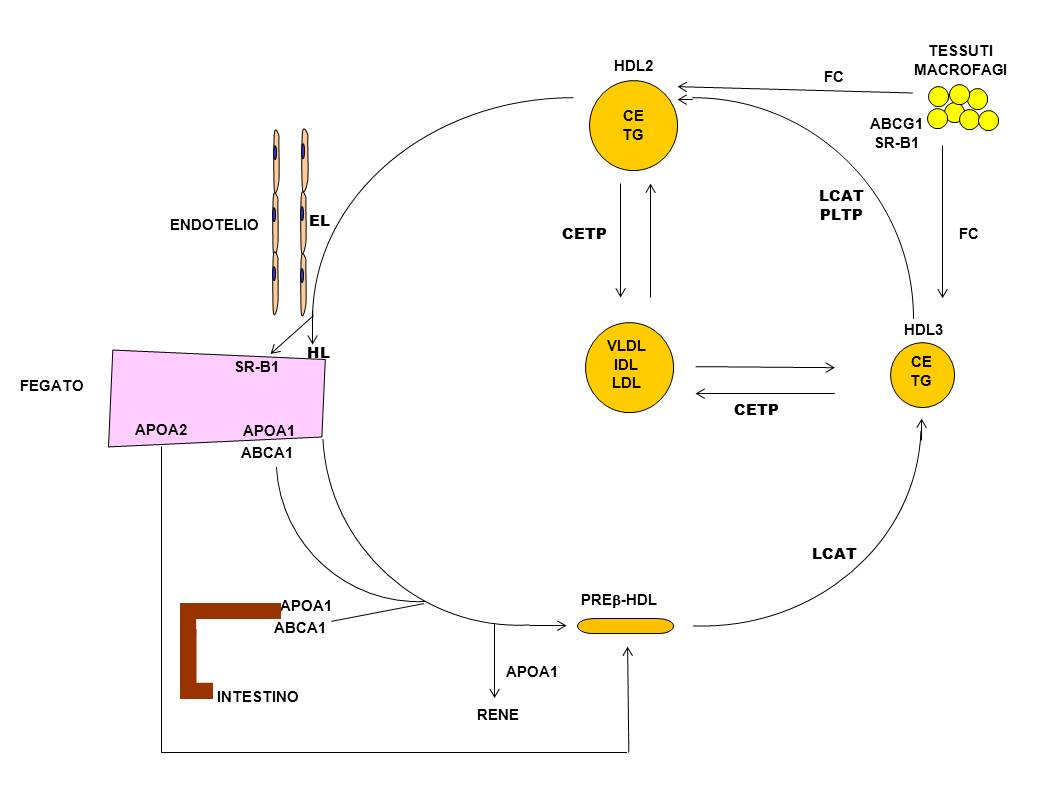
HDL cholesterol below 40 mg/dL (1.0 mmol/L) in men or 50 mg/dL (1.3 mmol/L) in women is low and increases cardiovascular risk. The healthy zone is roughly 40–60 mg/dL (men) and 50–70 mg/dL (women). HDL above 80 mg/dL, once assumed protective, may actually be associated with a slightly higher mortality — high is not automatically better.
HDL (high-density lipoprotein) transports cholesterol away from the arterial wall back to the liver — a process called reverse cholesterol transport. Observational studies show an inverse relationship with cardiovascular events between roughly 40 and 70 mg/dL, then the curve flattens and, at very high HDL (> 80 mg/dL), reverses in some populations. Genetic studies (Mendelian randomisation) show raising HDL pharmacologically does NOT reduce cardiovascular events, so HDL is a marker of the lipid environment rather than an independent treatment target. Exercise, weight loss, smoking cessation, and moderate alcohol raise HDL 5–15%; extreme fasting-mimicking diets and anabolic steroids drop it sharply.
- Low HDL (men)
- < 40 mg/dL (< 1.0 mmol/L)
- Low HDL (women)
- < 50 mg/dL (< 1.3 mmol/L)
- Healthy zone
- 40–70 mg/dL
- Extremely high
- > 80 mg/dL — not protective, sometimes worse
- Best raised by
- Exercise, weight loss, smoking cessation
What HDL actually does
HDL particles collect cholesterol from peripheral tissues — including arterial walls — and carry it back to the liver for disposal. This reverse cholesterol transport is the mechanism behind the observational protection. HDL also has anti-inflammatory and antioxidant effects on the endothelium; healthy HDL particles blunt oxidative stress on LDL and reduce the rate at which LDL becomes lodged in plaque.
The trouble is that HDL FUNCTION and HDL LEVEL are not the same. Two people with identical HDL of 55 mg/dL can have very different reverse-cholesterol capacity depending on particle composition. Genetic mutations that raise HDL (CETP variants, SR-BI mutations) do not consistently reduce cardiovascular events — one landmark study showed the opposite. This is why guidelines have moved away from targeting HDL as a treatment endpoint.
HDL categories and clinical meaning
| HDL (mg/dL) | Category | Cardiovascular implication |
|---|---|---|
| < 40 (M) / < 50 (F) | Low | Independent cardiovascular risk factor |
| 40 – 60 | Normal | Neutral to protective |
| 60 – 80 | High | Traditionally considered protective |
| > 80 | Very high | Association weakens or reverses in some cohorts |
What raises and lowers HDL
The best-evidenced lifestyle levers: (1) aerobic exercise — 150 min/week raises HDL by 5–10%; (2) weight loss — every 3 kg lost raises HDL by ~1 mg/dL; (3) smoking cessation — HDL rebounds by 4–10 mg/dL within a year; (4) moderate alcohol (1 drink/day for women, 2 for men) — small HDL boost but no longer recommended as a strategy because of overall harms; (5) replacing refined carbs with monounsaturated fats (olive oil, nuts) — 5–10% rise.
Common lowerers: sedentary lifestyle, obesity, uncontrolled diabetes, smoking, anabolic steroids, high-carbohydrate low-fat diets, and some medications (thiazides, non-selective beta-blockers, high-dose progestins).
Why raising HDL with medication has failed
Multiple large trials — TORCEP, AIM-HIGH, HPS2-THRIVE, REVEAL — used niacin, CETP inhibitors, or fibrates to raise HDL by 15–35%. None reduced cardiovascular events when added to modern statin therapy. The takeaway: HDL is a marker of a healthy lipid environment, not a lever you can pull in isolation. The treatable target remains ApoB-carrying particles (LDL, non-HDL, ApoB) and lifestyle.
- HDL < 30 mg/dL — check for anabolic steroid use, extreme fasting, or genetic hypoalphalipoproteinaemia.
- HDL > 100 mg/dL — check for CETP deficiency, primary biliary cholangitis, or alcohol use disorder.
- HDL dropped by more than 15 mg/dL between two consecutive panels — repeat and consider medication effect.
- Low HDL alongside triglycerides > 200 and central obesity — this is metabolic syndrome.
HDL interpretation walk-through
- 1Low HDL with high triglycerides and central obesity?Metabolic syndrome pattern. Focus on weight loss, exercise, and glucose management. Statins for LDL/non-HDL targets. Do NOT chase HDL with medication.
- 2Isolated low HDL, normal LDL and triglycerides?Uncommon in isolation. Screen for genetic causes if very low (Tangier disease, apoA-I mutations). Otherwise focus on exercise and smoking cessation.
- 3Very high HDL (> 100)?Check for CETP deficiency, alcohol use, liver disease. Not automatically protective — verify overall lipid pattern with non-HDL and ApoB.
- 4HDL modestly low but LDL and non-HDL on target?Overall cardiovascular risk is often acceptable. Manage lifestyle; do NOT add drugs specifically to raise HDL.
Related questions people ask
- What raises HDL fastest?
- Is high HDL always good?
- What is the ratio of total cholesterol to HDL?
- How does niacin affect HDL?
- Does alcohol raise HDL?
- How do LDL and HDL compare?
- Do triglycerides matter more than HDL?
Frequently asked questions
- HDL below 40 (M) or 50 (F) mg/dL is a cardiovascular risk factor.
- The healthy zone is 40–70 mg/dL — beyond 80 the protective association weakens.
- HDL function matters more than HDL level.
- Exercise, weight loss and smoking cessation raise HDL 5–15%.
- Raising HDL pharmacologically has NEVER reduced cardiovascular events in randomised trials.
- Treat LDL, non-HDL, and ApoB — HDL is a marker, not a treatment target.
References
3 sources- AHAHDL Cholesterol Guidelines
US position on HDL.
heart.org
- ESC/EAS2019 Dyslipidaemia Guidelines
European lipid management framework.
academic.oup.com
- CDCCholesterol Basics
Patient-facing cholesterol overview.
cdc.gov
Related articles
 Laboratory Tests
TSH Test: Normal Range, High, Low & What Your Result Actually Means
TSH is the single most important thyroid number. Understand normal ranges by age and pregnancy, what a high or low value really tells you, and the two follow-up tests that clinch the diagnosis.
 Laboratory Tests
HbA1c Test: Normal Range, Prediabetic, Diabetic Cut-offs & How to Lower It
HbA1c reflects your average blood sugar over ~3 months. Understand every threshold — normal, prediabetes, diabetes — and the realistic actions that move the number.
 Laboratory Tests
LDL Cholesterol: Optimal Numbers, High Numbers, and How to Read Yours
LDL is the "bad" cholesterol only if you leave the story there. Understand optimal targets by risk group, the ApoB perspective, and the interventions that actually shift the number.