HIV Test Explained: Window Period, Fourth-Generation Testing, and What Your Result Means
The window period, the difference between antibody and antigen tests, and how to read a positive or indeterminate result — everything you need to interpret an HIV screen with confidence.
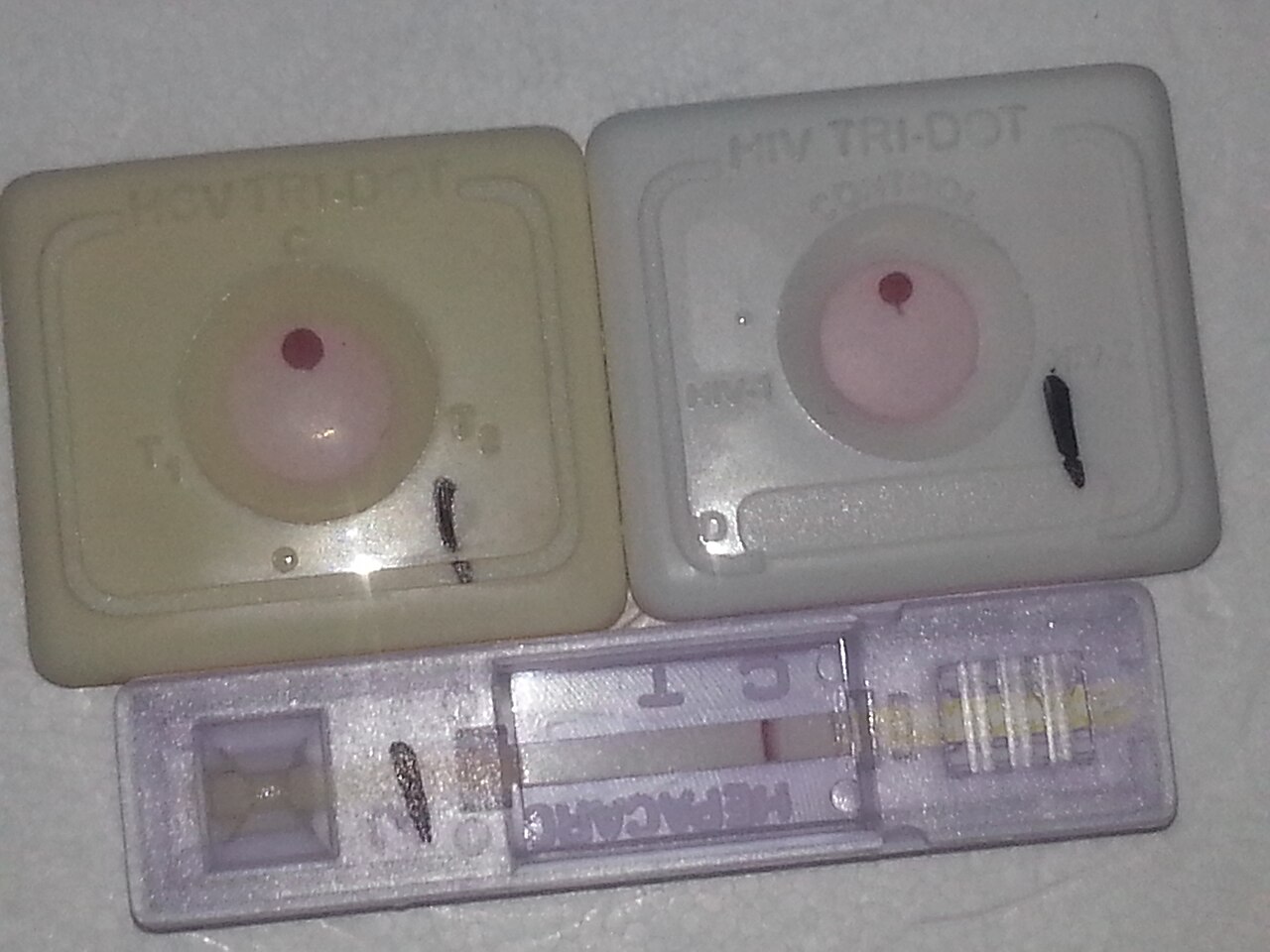
A modern 4th-generation HIV Ag/Ab lab test detects most infections within 18–45 days of exposure. Rapid finger-prick antibody tests detect infection within 22–90 days. The definitive "all-clear" period is 45 days for lab-based 4th-generation tests and 90 days for rapid tests. Any reactive screening result requires a confirmatory test — either differentiation antibody assay or HIV RNA PCR.
HIV testing has moved through four generations. First-gen detected only antibodies; fourth-gen detects both HIV-1 p24 antigen (appears at 2–3 weeks) and antibodies to HIV-1 and HIV-2 (appear at 3–12 weeks). The CDC-recommended testing algorithm is: 4th-generation Ag/Ab immunoassay → if reactive, HIV-1/HIV-2 antibody differentiation assay → if indeterminate, HIV RNA PCR to detect acute infection before seroconversion. A single non-reactive 4th-generation test at 45 days after exposure is considered definitive for most people. Rapid tests are convenient but detect antibodies only, so they have a longer window.
- 4th-gen lab test window
- 18–45 days
- Rapid antibody test window
- 22–90 days
- HIV RNA PCR window
- 10–33 days (used for acute infection)
- Definitive negative (lab)
- 45 days post-exposure
- Any reactive screen needs
- Confirmatory testing
What each HIV test looks for
First and second-generation HIV tests detected only IgG antibodies to HIV — these take 3–12 weeks to develop, so the window period was long. Third-generation added IgM antibodies (which appear earlier, at 2–5 weeks). Fourth-generation added detection of the HIV-1 p24 antigen — a viral protein that appears within 2–3 weeks of infection, before antibodies. Fourth-generation is now the standard laboratory screening test in most developed countries.
HIV RNA PCR (nucleic acid testing) detects viral RNA directly and can identify infection at 10–33 days post-exposure. It is more expensive and reserved for acute infection workup, post-exposure prophylaxis follow-up, or indeterminate 4th-generation results.
HIV test types compared
| Test | Window period | Best used for |
|---|---|---|
| 4th-generation lab Ag/Ab | 18–45 days | Routine screening; standard first-line |
| 3rd-generation lab antibody | 3–12 weeks | Largely superseded |
| Rapid finger-prick / oral fluid (antibody) | 22–90 days | Point-of-care and outreach testing |
| HIV RNA PCR | 10–33 days | Suspected acute infection, PEP follow-up, indeterminate results |
| Home mail-in tests | Same as lab | Privacy and access |
The CDC testing algorithm
Step 1: 4th-generation Ag/Ab immunoassay. If non-reactive and outside window → negative. If reactive → Step 2: HIV-1/HIV-2 antibody differentiation immunoassay. If positive → confirmed HIV-1 or HIV-2. If indeterminate or negative but 4th-gen was reactive → Step 3: HIV RNA PCR. Positive RNA with a reactive 4th-gen but negative antibody differentiation = acute HIV infection.
Note: Western blot has been superseded by antibody differentiation assays in most modern labs because it produced too many indeterminate results in acute infection.
Post-exposure and PrEP testing timing
After a high-risk exposure without post-exposure prophylaxis (PEP): test at 4–6 weeks, 3 months, and 6 months. After PEP: test at completion of PEP (28 days), 3 months, and 6 months. On PrEP: HIV test every 3 months to catch breakthrough infection before drug resistance develops.
- Unprotected high-risk exposure in the last 72 hours — PEP window (post-exposure prophylaxis).
- Reactive HIV screening result — go for confirmatory testing.
- Symptoms of acute HIV (fever, sore throat, rash, lymphadenopathy) 2–4 weeks after possible exposure.
- Occupational needle-stick exposure — PEP must start within 72 hours.
- Positive rapid test in labour and delivery — start intravenous antiretrovirals immediately.
HIV testing decision tree
- 14th-generation Ag/Ab test non-reactive at ≥ 45 days post-exposure?Negative. No further testing required unless new exposure occurs.
- 24th-generation Ag/Ab reactive?Confirm with HIV-1/HIV-2 antibody differentiation assay. If positive → confirmed HIV.
- 34th-gen reactive but differentiation negative?Order HIV RNA PCR. Positive RNA = acute infection. Negative RNA = false-positive screen; repeat 4th-gen in 4–6 weeks.
- 4Rapid antibody test negative but exposure was 3 weeks ago?Rapid test is too early. Repeat with a lab 4th-gen test at 6 weeks and 3 months.
- 5Recent high-risk exposure < 72 hours ago?Emergency department or sexual health clinic for PEP consideration.
Related questions people ask
- What is the HIV window period?
- How accurate are rapid HIV tests?
- What is a 4th-generation HIV test?
- Do I need PEP?
- What if my HIV test is indeterminate?
- Can HIV cause a raised WBC?
- How often should I test on PrEP?
Frequently asked questions
- 4th-generation Ag/Ab test is the modern screening standard.
- Definitive negative window: 45 days for lab-based tests.
- Rapid antibody tests need up to 90 days for full clearance.
- HIV RNA PCR detects acute infection at 10–33 days.
- Any reactive screen requires confirmatory testing.
- PEP window is 72 hours; PrEP requires 3-monthly testing.
References
3 sources- CDCLaboratory Testing for the Diagnosis of HIV Infection
US CDC testing algorithm.
stacks.cdc.gov
- WHOConsolidated Guidelines on HIV Testing Services
International HIV testing consensus.
who.int
- BHIVAUK National Guidelines for HIV Testing
UK HIV testing pathway.
bhiva.org
Related articles
 Laboratory Tests
TSH Test: Normal Range, High, Low & What Your Result Actually Means
TSH is the single most important thyroid number. Understand normal ranges by age and pregnancy, what a high or low value really tells you, and the two follow-up tests that clinch the diagnosis.
 Laboratory Tests
HbA1c Test: Normal Range, Prediabetic, Diabetic Cut-offs & How to Lower It
HbA1c reflects your average blood sugar over ~3 months. Understand every threshold — normal, prediabetes, diabetes — and the realistic actions that move the number.
 Laboratory Tests
LDL Cholesterol: Optimal Numbers, High Numbers, and How to Read Yours
LDL is the "bad" cholesterol only if you leave the story there. Understand optimal targets by risk group, the ApoB perspective, and the interventions that actually shift the number.