Lung Nodule Found on CT: Should You Worry? (Fleischner Guide)
Most incidental lung nodules are benign. Size, density, and your risk profile — via the Fleischner Society rules — decide whether to watch, scan, or biopsy.
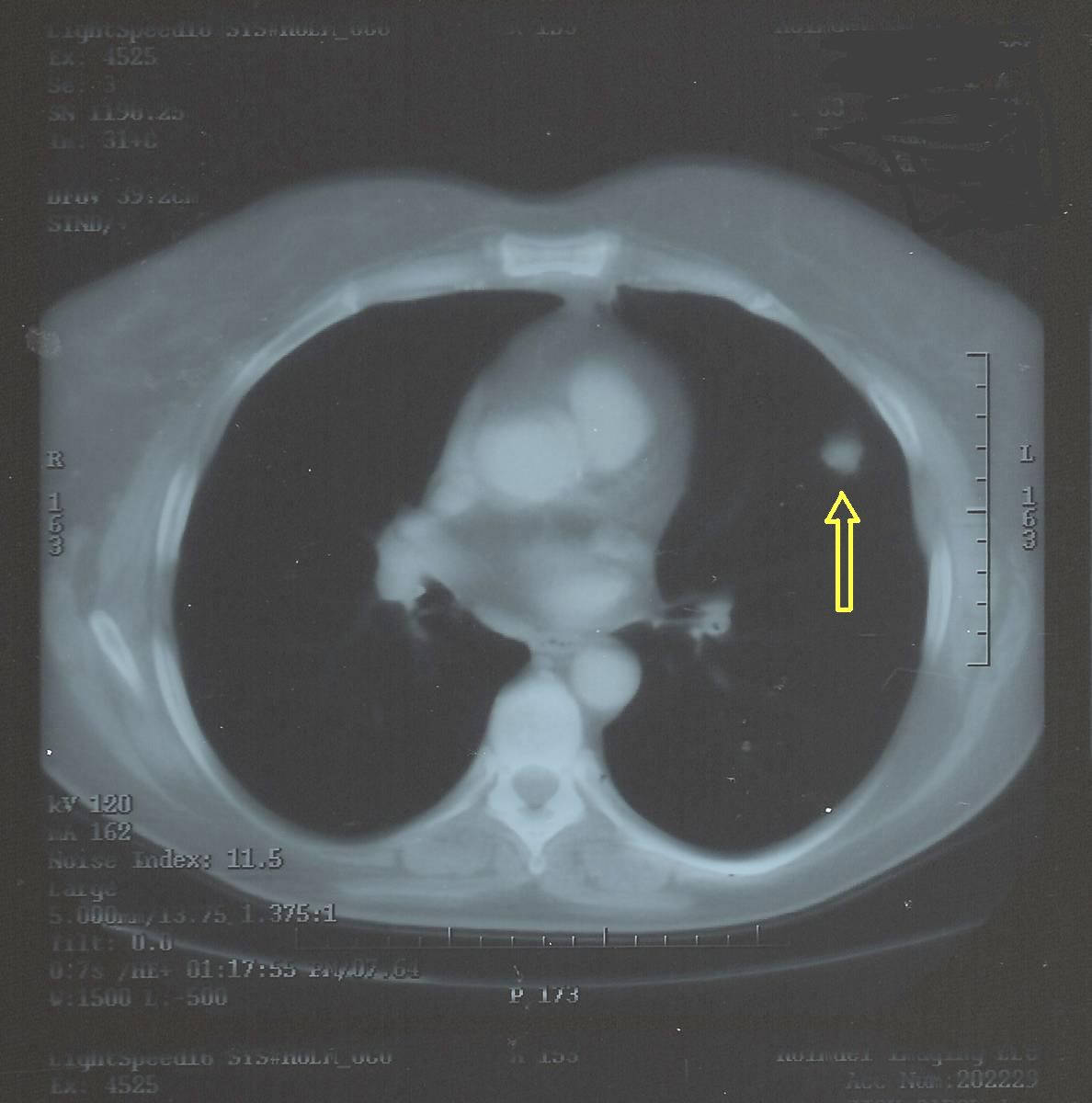
Most incidental lung nodules under 6 mm in low-risk patients need no follow-up. Nodules 6–8 mm need a repeat CT at 6–12 months. Nodules over 8 mm, or subsolid (ground-glass or part-solid) nodules of any size, need shorter-interval follow-up and often specialist input. High-risk patients (heavy smoking history, family history of lung cancer, occupational exposure) are managed one step more aggressively.
Most incidental lung nodules under 6 mm in low-risk patients need no follow-up. The Fleischner Society 2017 rules stratify follow-up by nodule size, density (solid, part-solid, ground-glass), number, and patient risk factors including smoking history. Ground-glass and part-solid nodules need longer surveillance despite slow growth. Nodules over 8 mm often require PET or biopsy.
- Guideline
- Fleischner Society 2017 (adults > 35)
- Size threshold for follow-up
- ≥ 6 mm solid, any subsolid > 6 mm
- Cancer probability by size
- < 5 mm: < 1% · 6–10 mm: ~1% · > 20 mm: ~50%
- Type matters
- Solid < part-solid ≤ ground-glass for malignancy risk
What the Fleischner rules actually say
The Fleischner Society 2017 rules stratify pulmonary nodules by size, density (solid, part-solid, ground-glass), number, and patient risk. They apply to incidental nodules found on adults over 35 without known cancer. Screening-detected nodules (Lung-RADS) follow separate rules.
A solid nodule under 6 mm in a low-risk patient needs no follow-up — the cancer risk is under 1%. The same nodule in a heavy smoker gets an optional 12-month CT. Part-solid and ground-glass nodules behave differently — they grow slowly (often years) but have higher malignancy risk when persistent, so follow-up is longer.
Fleischner follow-up (simplified)
| Nodule size | Solid, low-risk | Solid, high-risk | Subsolid (part-solid or GGN) |
|---|---|---|---|
| < 6 mm | No follow-up | Optional 12 mo | No follow-up if pure GGN < 6 mm |
| 6–8 mm | CT 6–12 mo | CT 6–12 mo, then 18–24 mo | CT 6–12 mo, then annual for 5 y |
| > 8 mm | CT 3 mo + PET or biopsy | CT 3 mo + PET or biopsy | Part-solid: CT 3–6 mo, then annual |
Simplified overview only. Always defer to the reporting radiologist and pulmonologist for individual cases.
- Age > 60.
- ≥ 30 pack-years of smoking.
- Family history of lung cancer.
- Occupational exposure: asbestos, radon, uranium, silica.
- Emphysema or pulmonary fibrosis on scan.
- Upper-lobe nodule location.
What to ask your doctor
- 1What was the exact size and density (solid, part-solid, ground-glass)?These drive the entire follow-up plan.
- 2What are my personal risk factors?Smoking pack-years, family history, occupational exposures shift the recommendations.
- 3How does this compare with prior scans?A nodule stable for 2 years is very unlikely to be cancer (except for pure GGNs).
- 4Should I see a pulmonologist?For nodules > 8 mm, part-solid, or high-risk patients — yes.
Related questions people ask
- How likely is a small lung nodule to be cancer?
- Do I need a biopsy for a lung nodule?
- What is a ground-glass nodule?
- How often should lung nodules be monitored?
- What is the Fleischner Society?
- Should smokers have annual CT scans?
- Can a lung nodule cause a persistent cough?
Frequently asked questions
- Most incidental lung nodules are benign.
- Size, density, and risk profile determine follow-up.
- Fleischner Society 2017 is the standard framework.
- Solid < 6 mm in low-risk = no follow-up needed.
- Ground-glass or growing nodules need specialist input.
References
2 sources- Fleischner Society 2017 Guidelines
Follow-up management for incidental pulmonary nodules.
pubs.rsna.org
- ACRLung-RADS
Screening-detected nodule management.
acr.org
Related articles
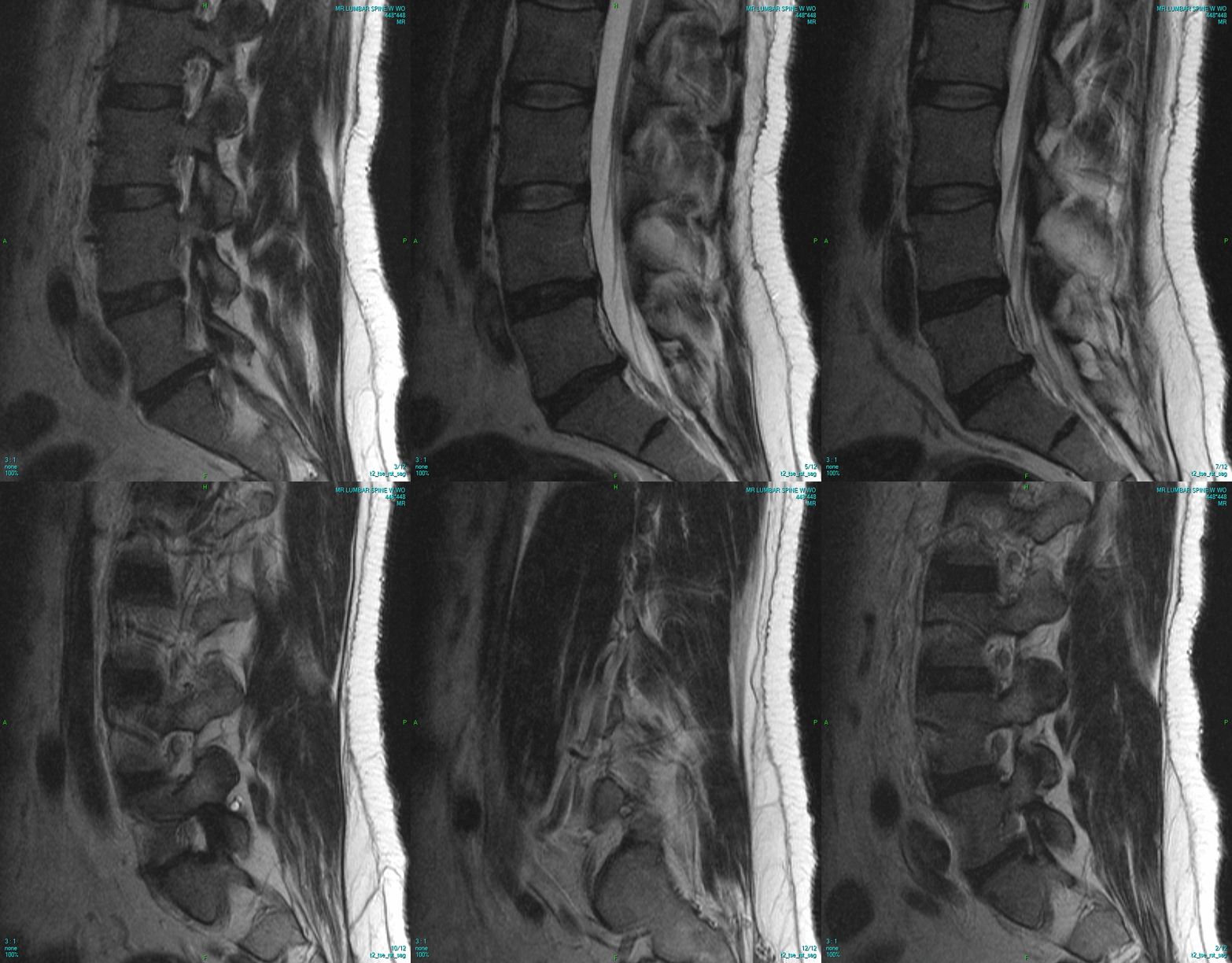 Imaging
Normal MRI But Ongoing Back Pain: What MRI Cannot See
MRI is excellent at structure but blind to inflammation patterns, functional pain, and central sensitisation. Here is what to consider when scans are clean.
 Lab Interpretation
Vitamin D Deficiency: When Low Numbers Actually Matter
A "low" vitamin D result is not always a real deficiency, and not every low result needs treatment. Here is how clinicians actually decide.
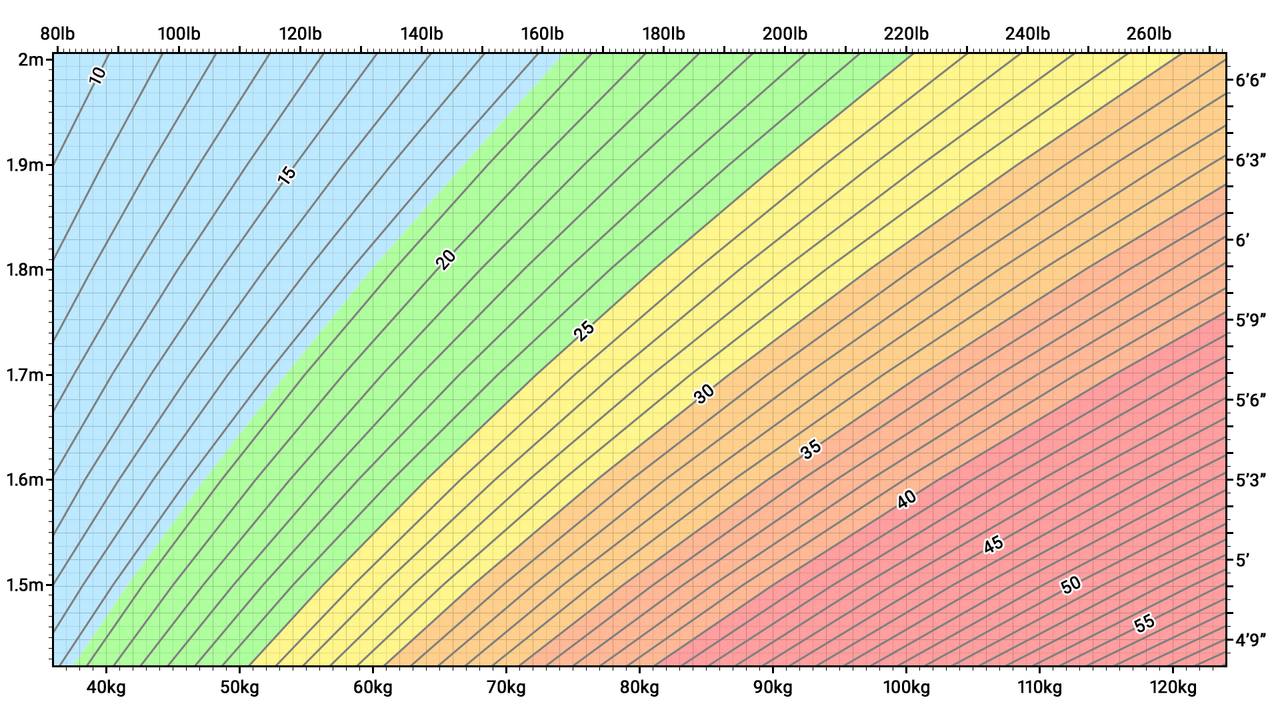 Body Measurements
Understanding BMI in 2026: Beyond the Single Number
BMI is a starting point, not a verdict. Here is how to interpret it with body fat %, waist-to-height and lifestyle context.