Sodium Blood Test: What High and Low Levels Actually Mean
Understand what a sodium blood test reflects, why abnormal results are usually about water balance rather than body sodium content, and when a result warrants urgent attention.
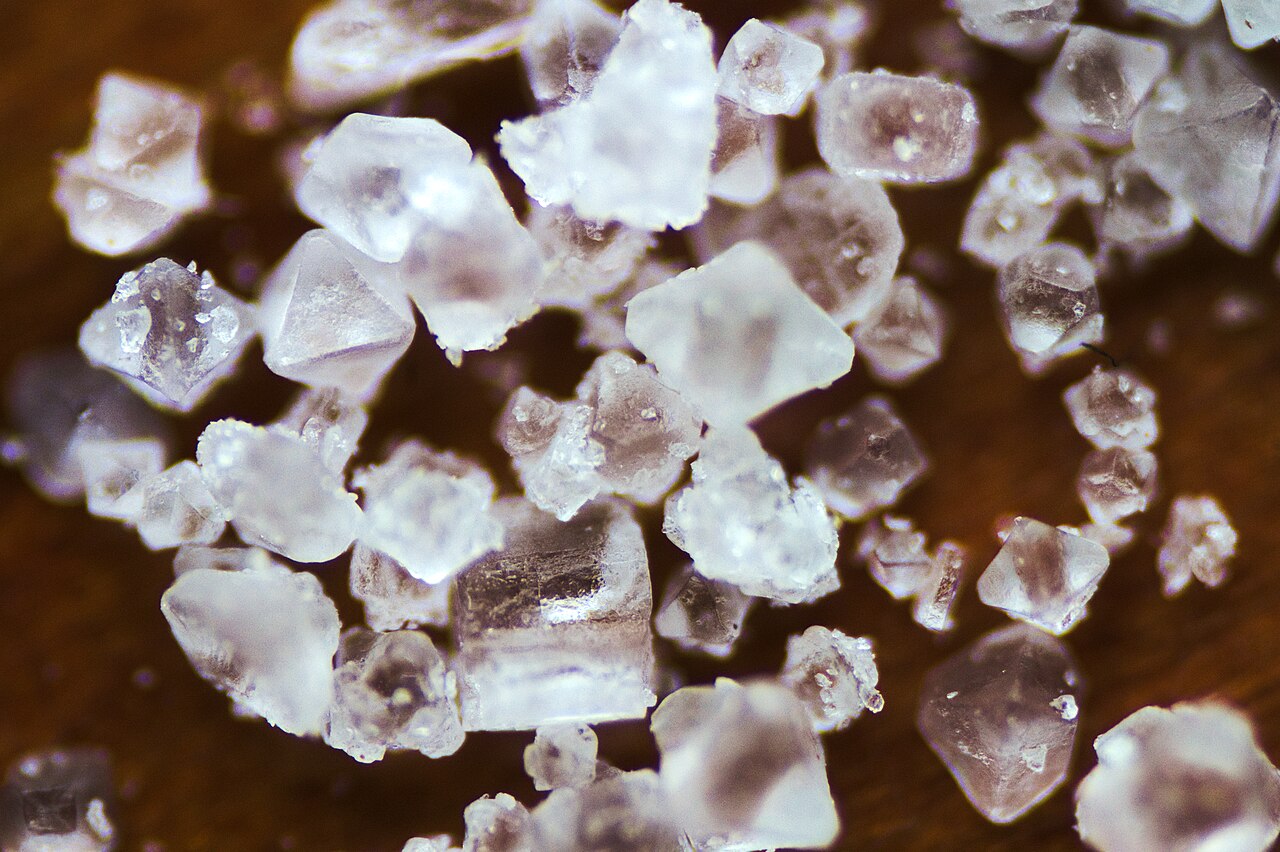
Image: Stanislav.nevyhosteny / Wikimedia Commons / CC BY-SA 4.0
A blood sodium test mostly reflects your body's water balance rather than how much dietary salt you've eaten, because sodium concentration in blood depends on the ratio between sodium and water, not the absolute amount of either. A typical normal range is roughly 135 to 145 mEq/L. Low sodium (hyponatremia) most often reflects relatively too much water compared to sodium, arising from causes as varied as certain medicines, hormonal conditions, or heart, liver, or kidney disease, and is generally categorized as mild, moderate, or profound depending on the level and accompanying symptoms. High sodium (hypernatremia) usually reflects a water deficit, often from inadequate fluid intake or fluid loss. Neither result reveals its specific cause on its own, and how quickly the change happened matters as much as the number itself.
It's a common assumption that a sodium blood test measures how salty your diet has been. In reality, this test is far more about water than about salt — your kidneys are remarkably good at holding sodium in a narrow range under normal circumstances, so an abnormal result usually points toward a water-balance problem, a hormonal signal affecting water retention, or an underlying organ issue, rather than your last meal.
- Sodium reflects the ratio of sodium to water in blood, not dietary salt intake or total body sodium.
- Normal range is roughly 135–145 mEq/L.
- European guidance categorizes hyponatremia as mild (130–135), moderate (125–129), or profound (under 125 mEq/L).
- How quickly a sodium abnormality develops matters as much as the level itself in determining urgency.
What the test measures
Sodium is the main charged particle (electrolyte) outside your cells, and it plays a central role in controlling how water moves between your cells and the surrounding fluid. Because water follows sodium concentration gradients, the body tightly regulates blood sodium concentration through a combination of thirst, kidney water handling, and hormones including antidiuretic hormone (vasopressin). A blood sodium test captures the balance point of all these systems at a single moment.
How the main pattern is interpreted
Low sodium is generally interpreted alongside your volume status — whether you appear dehydrated, have normal fluid balance, or show signs of fluid overload such as swelling — since the likely cause differs substantially between these three scenarios. Low sodium with signs of dehydration might point toward fluid loss (vomiting, diarrhea, certain diuretics) outpacing sodium loss. Low sodium with normal or increased fluid volume more often points toward a hormonal or organ-related cause affecting water handling, such as syndrome of inappropriate antidiuretic hormone (SIADH), heart failure, or liver disease.
High sodium is generally interpreted as reflecting a water deficit relative to sodium, most often from inadequate access to water, increased fluid losses (through sweating, fever, or certain medical conditions), or, less commonly, excess sodium intake or a hormonal condition affecting water conservation.
Reference ranges versus diagnostic thresholds
A standard reference range of roughly 135–145 mEq/L applies to most healthy adults, but clinical severity categories for low sodium go beyond a simple reference range. The 2014 European hyponatraemia guideline classifies biochemical severity as mild (130–135 mEq/L), moderate (125–129 mEq/L), and profound (under 125 mEq/L), with severity of symptoms (ranging from none, to moderately severe such as headache and confusion, to severe such as seizures or significantly decreased consciousness) considered alongside — and sometimes more heavily weighted than — the exact number.
It's worth being precise here: a sodium of 128 mEq/L with no symptoms is treated very differently from a sodium of 128 mEq/L with confusion and vomiting, even though the biochemical severity category (moderate) is the same in both cases.
What can distort the result
Certain medicines, particularly some diuretics, antidepressants, and pain medicines, are common contributors to low sodium. Excessive intake of plain water relative to salt — sometimes seen with endurance exercise or certain psychiatric conditions involving very high fluid intake — can also lower sodium. High sodium is more commonly seen with inadequate fluid access (especially in older adults or those unable to communicate thirst), significant fluid losses from fever, sweating, or certain gastrointestinal illnesses, or, less often, excess sodium intake without matching water intake.
What the result does not prove
A sodium result does not, by itself, reveal the underlying cause among the many possible explanations, and it does not indicate whether the change developed suddenly or gradually — information that significantly affects both risk and the appropriate pace of any correction, which is a decision made under clinical supervision rather than something addressed by this article.
Common misunderstandings
A common misunderstanding is assuming a low sodium result means you need to eat more salt, when the underlying issue is usually related to water balance or an underlying condition rather than dietary sodium intake. Another misunderstanding is assuming sodium abnormalities should be corrected as quickly as possible; in reality, correcting sodium too rapidly — particularly for chronic, slowly developed low sodium — carries its own serious risks, which is why correction is guided carefully by a clinician rather than adjusted quickly on your own.
Practical next-step guidance
If you receive a mildly abnormal sodium result without symptoms, reviewing recent fluid intake, any new medicines, and any gastrointestinal illness with a clinician is a reasonable starting point. If a low sodium result comes with any of the symptoms described in the safety section, prompt medical evaluation is appropriate rather than waiting for a routine follow-up appointment.
- A sodium level below 125 mEq/L, classified as profound hyponatremia by European guidance, is associated with meaningfully higher risk, particularly when symptoms are present. Severe symptoms — vomiting, seizures, significant confusion, or decreased consciousness — represent a medical emergency regardless of the exact number and require immediate evaluation. This article does not provide instructions for correcting sodium, since inappropriate correction speed can itself cause serious harm and must be managed clinically.
Limitations and uncertainty
A single sodium value doesn't reveal how quickly it developed or its underlying cause, both of which significantly affect risk and appropriate management, and symptom severity doesn't always track precisely with the exact number, particularly in chronic cases.
Frequently asked questions
Related articles
 Kidney Function & Electrolytes
Creatinine and eGFR: What These Kidney Function Results Mean Together
Understand what creatinine and estimated GFR (eGFR) measure, why eGFR is a calculated estimate rather than a direct measurement, and why one result cannot diagnose chronic kidney disease on its own.
 Kidney Function & Electrolytes
BUN Blood Test Explained: What High and Low Results Can Mean
Learn what blood urea nitrogen (BUN) measures, why it can rise for reasons unrelated to kidney filtration, and why the BUN-to-creatinine ratio adds context a single BUN value can't.
 Kidney Function & Electrolytes
Urine Albumin-to-Creatinine Ratio: An Early Kidney-Damage Test Explained
Learn why urine albumin-to-creatinine ratio (uACR) can detect kidney damage before eGFR falls, how the A1/A2/A3 categories work, and what can cause a falsely elevated result.