Uric Acid Blood Test: High Levels, Gout Risk and Kidney Context Explained
Learn why high uric acid alone does not diagnose gout, how kidney function and diet affect the result, and what this test can and cannot establish.
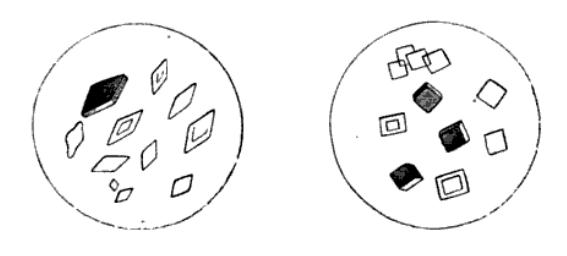
Image: w:Golding Bird / Wikimedia Commons / Public domain
A uric acid blood test measures a waste product formed when the body breaks down purines, compounds that come from both certain foods and the normal turnover of your own cells. A high result, called hyperuricemia, is associated with an increased risk of gout, but it does not diagnose gout on its own — a substantial number of people with elevated uric acid never develop gout symptoms at all, and gout is properly confirmed through specific clinical criteria or, ideally, by identifying urate crystals in fluid drawn from an affected joint. Uric acid is cleared primarily by the kidneys, so reduced kidney function is one common contributor to an elevated level, alongside certain medicines, alcohol intake, and purine-rich foods. A single result also can't reliably distinguish a temporary spike from a persistent pattern.
Uric acid and gout get treated as nearly synonymous in casual conversation, but the actual relationship is looser than that. Elevated uric acid is a genuine risk factor, not a diagnosis — think of it as one ingredient that makes gout more likely over time, rather than a symptom that confirms gout is present right now. Confirming an actual gout diagnosis, especially during a first flare, generally involves looking directly at the affected joint rather than relying on a blood uric acid number.
- High uric acid (hyperuricemia) increases gout risk but does not, by itself, diagnose gout.
- Many people with elevated uric acid never develop gout.
- Uric acid levels can be normal during an acute gout flare, so a normal result during a flare doesn't rule gout out.
- Reduced kidney function, certain medicines, alcohol, and purine-rich foods are common contributors to elevated uric acid.
What the test measures
Purines are compounds found in many foods (particularly organ meats, certain seafood, and beer) and are also produced continuously as your own cells break down and turn over. The body converts purines into uric acid, most of which is then filtered out by the kidneys and excreted in urine, with a smaller amount eliminated through the gut. A uric acid blood test measures the balance between how much uric acid your body is producing and how efficiently your kidneys are clearing it.
How the main pattern is interpreted
An elevated uric acid result is generally interpreted as a risk factor rather than a diagnosis, since the relationship between blood level and actual gout symptoms varies considerably between individuals — some people tolerate quite high levels for years without a flare, while others develop symptoms at more modest elevations. Because of this, formal gout classification, developed jointly by the American College of Rheumatology and the European League Against Rheumatism in 2015, relies primarily on identifying urate crystals in joint fluid or synovial tissue as the most definitive criterion, with a structured combination of clinical, laboratory, and imaging features used when crystal identification isn't available or performed.
Persistently elevated uric acid over time is more relevant to long-term gout risk than a single reading, and uric acid is also relevant beyond joints — sustained elevation has associations with kidney stone risk, since uric acid can form one type of kidney stone.
Reference ranges versus diagnostic thresholds
Typical reference ranges are roughly 3.4–7.0 mg/dL for men and 2.4–6.0 mg/dL for women, though exact cut-offs vary by lab. It's important to separate this statistical reference range from any specific number used in gout diagnosis: the 2015 ACR/EULAR classification criteria do not rely on a single uric acid cut-off as a stand-alone diagnostic threshold — they use it as one contributing factor within a broader points-based system that weighs joint pattern, timing of symptoms, and, most heavily, direct evidence of urate crystals. This is a meaningful distinction: a uric acid level above a lab's reference range is not the same thing as meeting formal gout classification criteria.
What can distort the result
Reduced kidney function is one of the most common contributors to elevated uric acid, since impaired clearance allows levels to build up. Certain medicines, including some diuretics and low-dose aspirin, can raise uric acid. Alcohol, particularly beer, and purine-rich foods such as organ meats and certain seafood can raise levels, at least temporarily. Conditions involving rapid cell turnover, including certain blood cancers or their treatment, can cause a more significant rise through increased purine release. Notably, uric acid can paradoxically drop during an acute gout attack itself in some people, which is why a normal level during a flare doesn't rule out gout.
What the result does not prove
A high uric acid result does not, by itself, prove that gout is present, has occurred, or will occur — it identifies increased risk, not a certainty. It also does not distinguish whether an elevation is primarily due to increased production, reduced kidney clearance, or both, without further clinical context.
Common misunderstandings
A common misunderstanding is treating any elevated uric acid result as equivalent to a gout diagnosis, when formal classification criteria place the most weight on direct joint findings, particularly crystal identification, rather than the blood level alone. Another misunderstanding is assuming a normal uric acid result during joint pain rules out gout — levels can be normal or even temporarily low during an actual flare.
Practical next-step guidance
If you have joint pain and an elevated uric acid result, a clinical evaluation of the specific joint, including possible fluid analysis, is generally more informative than the blood test alone for confirming or excluding gout. If uric acid is elevated without symptoms, reviewing kidney function, current medicines, and alcohol intake with a clinician is a reasonable next step, since these are common modifiable or explainable contributors.
- Very high uric acid in the context of certain cancer treatments causing rapid cell breakdown (a situation called tumor lysis syndrome) reflects a distinct and more urgent clinical scenario than typical gout-related elevation and requires prompt medical attention when it occurs in that context. Persistent joint pain and swelling, regardless of the uric acid level, is worth clinical evaluation.
Limitations and uncertainty
The relationship between blood uric acid level and actual gout symptoms varies considerably between individuals, and this test alone cannot substitute for direct joint-fluid evaluation when gout is genuinely suspected, particularly for a first-time diagnosis.
Frequently asked questions
Related articles
 Kidney Function & Electrolytes
Creatinine and eGFR: What These Kidney Function Results Mean Together
Understand what creatinine and estimated GFR (eGFR) measure, why eGFR is a calculated estimate rather than a direct measurement, and why one result cannot diagnose chronic kidney disease on its own.
 Kidney Function & Electrolytes
BUN Blood Test Explained: What High and Low Results Can Mean
Learn what blood urea nitrogen (BUN) measures, why it can rise for reasons unrelated to kidney filtration, and why the BUN-to-creatinine ratio adds context a single BUN value can't.
 Kidney Function & Electrolytes
Urine Albumin-to-Creatinine Ratio: An Early Kidney-Damage Test Explained
Learn why urine albumin-to-creatinine ratio (uACR) can detect kidney damage before eGFR falls, how the A1/A2/A3 categories work, and what can cause a falsely elevated result.