ESR (Erythrocyte Sedimentation Rate): What Raised ESR Really Means
ESR is a 100-year-old test that still has a specific role in 2026 — flagging temporal arteritis, polymyalgia rheumatica and monitoring chronic inflammation. Learn when it matters and when CRP is better.
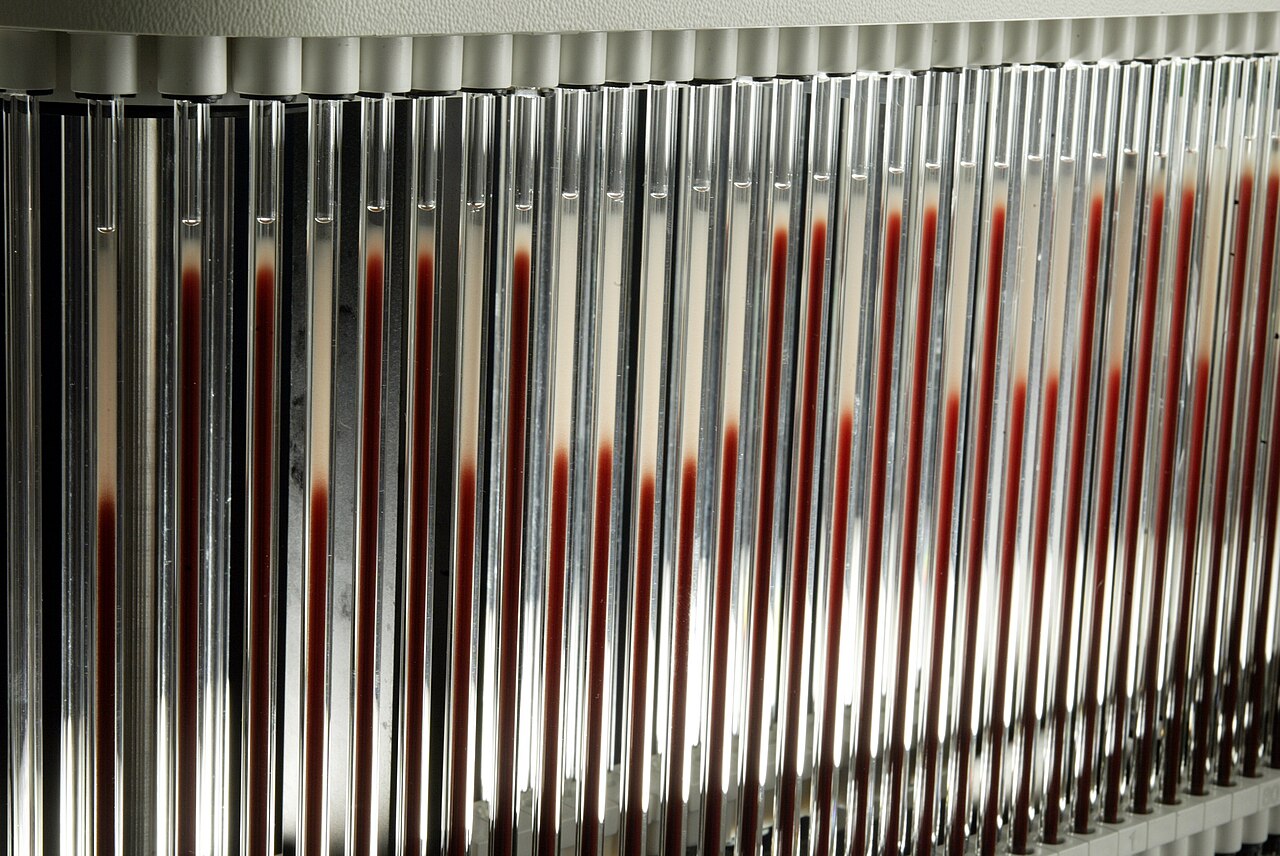
Normal ESR depends on age and sex — a rough upper limit is (age ÷ 2) mm/h for men and (age + 10) ÷ 2 for women. ESR above 100 mm/h has a short differential: infection, malignancy (especially myeloma or lymphoma), temporal arteritis, or major autoimmune disease. Below that, ESR is a non-specific inflammation marker that has largely been replaced by CRP for acute problems.
ESR measures how fast red blood cells settle in a vertical tube of anticoagulated blood over one hour. Fibrinogen and other acute-phase proteins make red cells stack (rouleaux), speeding sedimentation. It rises slowly (24–48 hours) and falls slowly (weeks), which makes it useful for MONITORING chronic conditions but poor for acute events — where CRP responds within hours. ESR remains first-line in three specific settings: giant cell (temporal) arteritis, polymyalgia rheumatica, and multiple myeloma workup (where ESR > 100 with a monoclonal band pattern is classical).
- Normal (men)
- ≤ (age ÷ 2) mm/h
- Normal (women)
- ≤ (age + 10) ÷ 2 mm/h
- ESR > 100
- Short differential: infection, cancer, GCA, autoimmune
- Rises in
- 24–48 hours
- Falls in
- Weeks
How ESR works and why it lags
Red blood cells normally repel each other because of their negative surface charge. When acute-phase proteins (particularly fibrinogen) rise, they bridge the negative charges and red cells stack like coins (rouleaux), which fall through the tube faster. ESR captures this effect but the fibrinogen response takes 24–48 hours to develop and weeks to resolve — so ESR is a slow, integrating marker rather than an acute one.
This makes CRP (rises within 6 hours) the modern first-line inflammation marker for anything acute. ESR still shines in scenarios where the slow response is an advantage — chronic autoimmune disease monitoring, temporal arteritis workup, and multiple myeloma screening.
ESR vs CRP head-to-head
| Feature | ESR | CRP |
|---|---|---|
| Speed of rise | 24–48 hours | 6–8 hours |
| Speed of fall | Weeks | Days |
| Best for | Chronic monitoring, GCA, PMR, myeloma | Acute inflammation, infection |
| Affected by anaemia | Yes (falsely elevated) | No |
| Affected by pregnancy | Yes (elevated) | No |
| Standardisation | Poor between labs | Good |
ESR > 100 — a short differential
Extremely high ESR (typically > 100 mm/h) has one of four causes 90% of the time: (1) infection — endocarditis, osteomyelitis, tuberculosis, abscess; (2) malignancy — multiple myeloma or lymphoma most classically, but any advanced cancer; (3) giant cell arteritis or polymyalgia rheumatica; (4) major autoimmune disease flare — lupus, rheumatoid arthritis, vasculitis. Consider these five in every unexplained ESR > 100.
- ESR > 50 + new headache, jaw claudication, scalp tenderness, visual disturbance in a patient > 50 — suspect giant cell arteritis, START high-dose steroid same day and refer.
- ESR > 100 with bone pain, anaemia, hypercalcaemia — screen for multiple myeloma (SPEP, serum-free light chains).
- ESR > 100 with fever, weight loss, night sweats — occult malignancy or chronic infection workup.
- ESR rising on treatment for chronic inflammatory disease — reassess the underlying disease and possibly change therapy.
Interpreting a raised ESR
- 1Mildly raised ESR (< 40) with no symptoms?Non-specific — repeat in 4–6 weeks, correlate with CRP.
- 2ESR 40–100 with symptoms of chronic disease?Investigate underlying disease. Add autoantibody screen, infection screen, imaging as guided by symptoms.
- 3ESR > 100?Screen aggressively for infection (endocarditis, osteomyelitis), malignancy (SPEP, imaging), autoimmune disease and giant cell arteritis.
- 4Suspected GCA/PMR?Do NOT wait for the ESR — start prednisolone empirically at 40–60 mg/day and arrange urgent rheumatology and temporal artery biopsy or ultrasound.
Related questions people ask
- How does ESR compare to CRP?
- What causes ESR over 100?
- Does anaemia raise ESR?
- Is ESR still useful in 2026?
- What is polymyalgia rheumatica?
- What does high hs-CRP mean?
- Does age affect ESR?
Frequently asked questions
- ESR is a slow, integrating marker — CRP is faster for acute problems.
- ESR > 100 has a short differential: infection, cancer, GCA, autoimmune.
- Elderly with headache + raised ESR = GCA until proven otherwise.
- Anaemia, pregnancy and age all shift ESR — check age-adjusted ranges.
- ESR remains first-line for GCA, PMR, myeloma workup.
- Serial ESR is best for chronic inflammatory disease monitoring.
References
3 sources- BSRGuidelines for the Management of Giant Cell Arteritis
UK GCA management standard.
academic.oup.com
- ACRPolymyalgia Rheumatica Guidelines
US ACR/EULAR PMR guideline.
rheumatology.org
- AAFPInterpreting Elevated ESR
Primary-care ESR interpretation.
aafp.org
Evidence Snapshot
This snapshot shows verified evidence records matched to this article. It is not a diagnosis or personal medical advice.
The erythrocyte sedimentation rate (ESR) measures how quickly red blood cells settle at the bottom of a vertical tube and is used as an indirect indicator of inflammation because certain acute-phase proteins alter red cell aggregation.
Limitation. ESR responds more slowly to acute changes than CRP and is influenced by non-inflammatory factors.
C-reactive protein (CRP) is an acute-phase protein produced by the liver that rises in blood in response to inflammation and tissue injury.
Limitation. CRP does not identify the cause or site of inflammation and is elevated by many different conditions.
Related articles
 Laboratory Tests
TSH Test: Normal Range, High, Low & What Your Result Actually Means
TSH is the single most important thyroid number. Understand normal ranges by age and pregnancy, what a high or low value really tells you, and the two follow-up tests that clinch the diagnosis.
 Laboratory Tests
HbA1c Test: Normal Range, Prediabetic, Diabetic Cut-offs & How to Lower It
HbA1c reflects your average blood sugar over ~3 months. Understand every threshold — normal, prediabetes, diabetes — and the realistic actions that move the number.
 Laboratory Tests
LDL Cholesterol: Optimal Numbers, High Numbers, and How to Read Yours
LDL is the "bad" cholesterol only if you leave the story there. Understand optimal targets by risk group, the ApoB perspective, and the interventions that actually shift the number.