Lean Body Mass: The Metric Behind Every Calorie Calculation
Forget your weight. The number that quietly drives your BMR, your protein needs and your training results is the lean mass underneath.
Lean body mass (LBM) is your total weight minus your fat — muscle, bone, water, organs and connective tissue. For most adults it sits between 60% and 85% of body weight. LBM is the engine of your metabolism: it drives ~80% of your resting energy expenditure and determines how much protein you actually need each day.
Lean body mass equals total body weight minus fat mass. The Boer formula estimates it from weight and height: men LBM = 0.407·kg + 0.267·cm − 19.2; women LBM = 0.252·kg + 0.473·cm − 48.3. Fat-free mass index (LBM ÷ height² in metres) is 16–20 for adult women and 19–24 for adult men. Preserving LBM through age requires resistance training two to three times per week plus 1.4–1.8 g/kg/day of protein.
- What it is
- Everything except fat: muscle, bone, water, organs
- Typical LBM %
- 60 – 85% of total body weight
- Boer men
- LBM = 0.407·kg + 0.267·cm − 19.2
- Boer women
- LBM = 0.252·kg + 0.473·cm − 48.3
- FFMI healthy range
- Women 16–20 · Men 19–24
- Loss after age 30
- 3 – 8% per decade unless trained
What lean body mass actually is
Lean body mass (LBM) is everything you are minus your fat: muscle, bone, water, organs, connective tissue. It is sometimes called fat-free mass. For most adults it sits between 60–85% of total body weight, with healthy ranges varying by sex and age.
Two people of identical weight can have wildly different LBMs — which is why the same calorie target leaves one feeling great and another wrecked. LBM is the underlying engine.
Why LBM is the real driver of metabolism
Roughly 80% of your resting energy expenditure comes from lean tissue, with muscle and organs leading the contribution. Add a kilogram of muscle and your BMR ticks up by ~13 kcal/day; lose a kilogram to sarcopenia and you lose that engine forever — unless you train.
Levers that grow LBM
Two or three resistance sessions per week with progressive overload. 1.4–1.8 g/kg/day of protein, distributed across meals. Enough sleep (7–9 hours) to actually recover. Patience — meaningful LBM changes take 8–12 weeks, not 8 days.
Frequently asked questions
- LBM is everything you are minus fat — muscle, bone, water, organs.
- LBM drives ~80% of your resting metabolism.
- Lean-mass index (FFMI) is a better metabolic marker than BMI in athletes.
- Resistance training + 1.4–1.8 g/kg protein preserves LBM through ageing.
Related articles
 Body Measurements
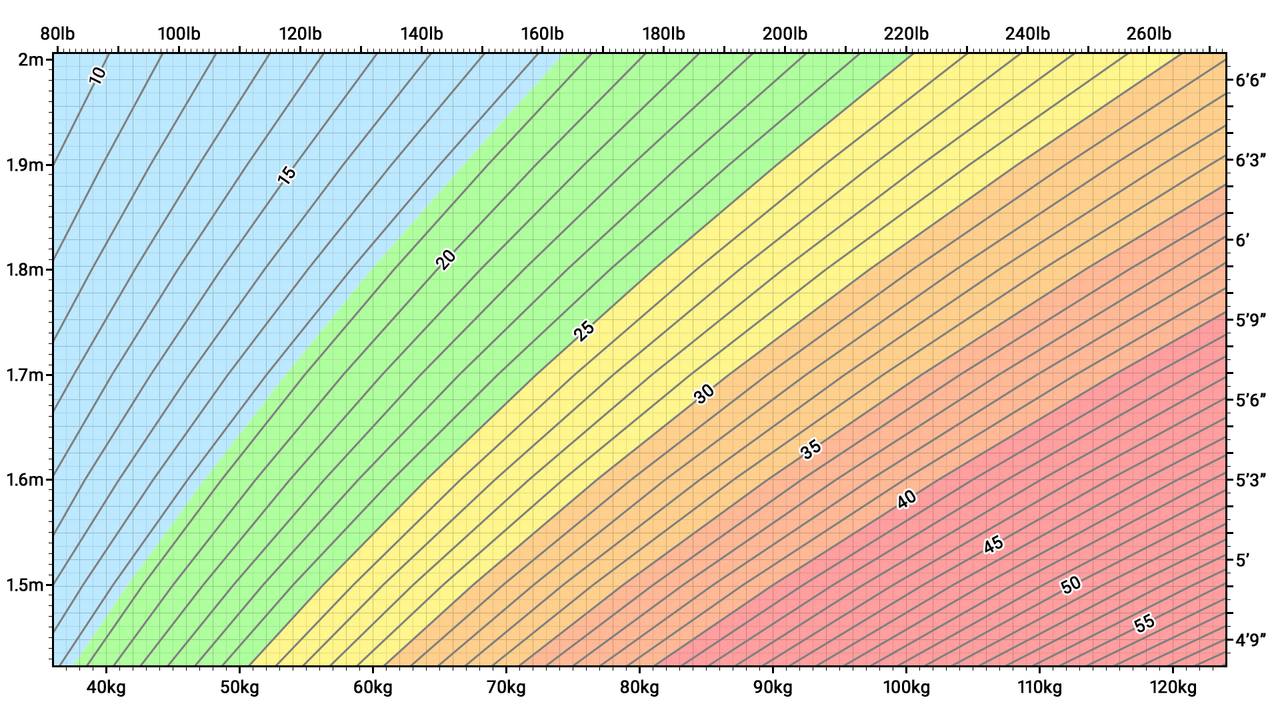
Understanding BMI in 2026: Beyond the Single Number
BMI is a starting point, not a verdict. Here is how to interpret it with body fat %, waist-to-height and lifestyle context.
 Body Measurements
Waist-to-Height: The Vital Sign That Outperforms BMI
A tape measure and one ratio reveal more about your metabolic risk than the bathroom scale ever could.
 Lab Interpretation
Vitamin D Deficiency: When Low Numbers Actually Matter
A "low" vitamin D result is not always a real deficiency, and not every low result needs treatment. Here is how clinicians actually decide.