Urinalysis (Urine Dipstick): Every Marker Explained — Blood, Protein, Glucose, Ketones and More
A urine dipstick can flag kidney disease, infection, diabetes, and dehydration in under a minute. Learn what every colour square means, what to trust, and what to repeat.
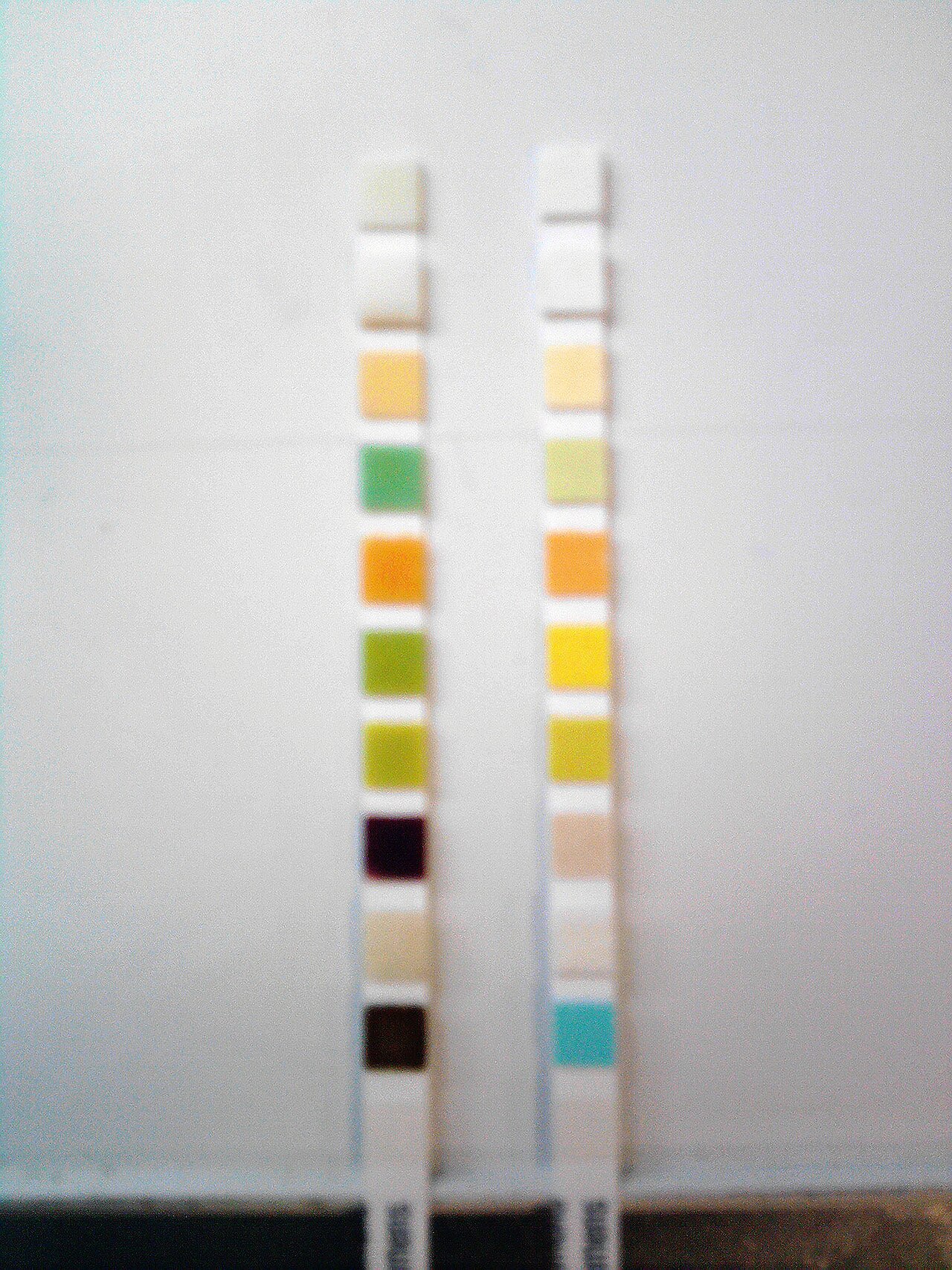
A standard urine dipstick reports 8–10 markers: protein, blood, leukocyte esterase, nitrites, glucose, ketones, bilirubin, urobilinogen, specific gravity and pH. Nitrites + leukocytes together strongly suggest a urinary tract infection; protein above trace on repeat testing is investigated for kidney disease; glucose on the dipstick usually reflects blood sugar above 180 mg/dL.
The urine dipstick is a rapid, low-cost screening tool. Protein detection is most sensitive to albumin — for accurate quantification use a spot albumin-to-creatinine ratio (ACR). Blood on the dipstick can reflect red cells, free haemoglobin (haemolysis), or myoglobin (rhabdomyolysis); microscopy differentiates them. Leukocyte esterase + nitrites together carry the highest positive predictive value for UTI (~85%). Glucose spills into urine when plasma glucose exceeds ~180 mg/dL. Ketones appear in DKA, prolonged fasting, ketogenic diet, and severe vomiting. Specific gravity 1.010–1.020 is normal hydration; below 1.005 suggests diabetes insipidus in the right clinical context.
- Normal dipstick
- All markers negative or trace
- Best UTI signal
- Nitrites POSITIVE + leukocytes POSITIVE
- Protein trace on one sample
- Repeat + urine ACR before workup
- Glucose positive means
- Blood glucose usually > 180 mg/dL
- Specific gravity 1.010
- Well-hydrated
The ten markers, one by one
Protein (or albumin): dipstick detects mostly albumin. Trace or 1+ on a single sample is often incidental (post-exercise, dehydration, fever). Persistent ≥ 1+ warrants a spot albumin-to-creatinine ratio (ACR). ACR ≥ 30 mg/g is significant albuminuria and is a stage marker in chronic kidney disease.
Blood: detects red cell peroxidase, so it also reads positive for free haemoglobin (haemolysis) and myoglobin (rhabdomyolysis). Microscopy shows red cells if bleeding, or a clear urine with strong-positive dipstick if pigment. Persistent haematuria over age 40 needs urology workup — bladder or upper tract cancer risk.
Leukocyte esterase and nitrites: leukocyte esterase indicates pus cells; nitrites indicate that Enterobacteriaceae (E. coli, Klebsiella, Proteus) have converted urinary nitrates to nitrites — a strong bacteria-specific signal. The two together are the most reliable dipstick pattern for UTI. A negative nitrite does NOT rule out UTI because staphylococci, enterococci, and some Pseudomonas do not produce nitrites.
Glucose: renal threshold is around 180 mg/dL; below that, no glucose spills. Positive dipstick usually means diabetes with poor control OR the rare renal glycosuria (SGLT2 inhibitor use or a familial low renal threshold).
Ketones: appear in fasting, ketogenic diet, alcohol excess, prolonged vomiting, and diabetic ketoacidosis. A diabetic with ketones + high glucose is a medical emergency.
Bilirubin and urobilinogen: bilirubin appears in cholestatic liver disease; urobilinogen rises in haemolysis and falls in complete biliary obstruction. Neither is routinely useful in isolation.
Specific gravity: 1.010–1.020 reflects normal hydration; > 1.030 dehydration; < 1.005 diabetes insipidus, water loading, or lithium effect.
pH: usually 5.0–7.5. Persistently high pH (> 7) with UTI suggests Proteus or Klebsiella (they produce urease and alkalinise urine).
Common dipstick patterns
| Pattern | Suggestive of | Next step |
|---|---|---|
| Nitrites + leukocytes positive | Urinary tract infection | Send urine culture; treat empirically if symptomatic |
| Blood positive, no red cells on microscopy | Myoglobin or haemoglobin | CK for rhabdomyolysis, haemolysis screen |
| Protein 2+, no other abnormalities | Kidney disease vs orthostatic proteinuria | Spot ACR + eGFR + repeat on early-morning sample |
| Glucose positive, ketones positive | Diabetes with ketosis | Immediate glucose check; ketoacidosis workup if unwell |
| Bilirubin positive, urobilinogen absent | Complete biliary obstruction | Liver enzymes, ultrasound |
| Specific gravity < 1.005 fixed | Diabetes insipidus | Water deprivation test, sodium |
Why dipstick results can mislead
Concentrated urine (specific gravity > 1.020) exaggerates protein and blood positives. Dilute urine can hide real disease. Vitamin C at high dose interferes with several strip readings (false-negative blood, glucose, nitrites). Contamination with menstrual blood, vaginal discharge, or povidone-iodine skin cleanser can produce false positives. A first-morning midstream sample is the most reliable for kidney and protein assessment.
- Ketones POSITIVE with glucose POSITIVE — assess for diabetic ketoacidosis.
- Nitrites POSITIVE with fever, back pain, or vomiting — suspect pyelonephritis.
- Blood on dipstick over age 40 with clots or weight loss — urgent urology referral.
- Protein 3+ with new peripheral oedema — nephrotic syndrome.
- Persistent high pH + UTI symptoms — urease-producing infection (Proteus), stone risk.
Dipstick follow-up
- 1Nitrites + leukocytes positive with UTI symptoms?Send culture; treat empirically per local resistance patterns. Adjust after culture sensitivity.
- 2Isolated haematuria (blood only) confirmed on microscopy?Under 40 with UTI cleared → repeat in 6 weeks. Over 40 or persistent → urology referral for cystoscopy and upper tract imaging.
- 3Protein positive on one sample?Repeat on early-morning sample. If persistent → spot albumin-to-creatinine ratio + eGFR. ACR ≥ 30 = significant albuminuria.
- 4Glucose positive without diabetes?Check plasma glucose and HbA1c. If both normal → consider SGLT2 inhibitor use or familial renal glycosuria.
- 5Specific gravity persistently low?Screen for diabetes insipidus (sodium, water deprivation test), lithium exposure, hypercalcaemia.
Related questions people ask
- What does trace protein in urine mean?
- Is blood in urine always serious?
- Can I have a UTI with a negative dipstick?
- What is albumin-to-creatinine ratio?
- What causes ketones in urine?
- Does dehydration change urine test results?
- Why is my urine specific gravity high?
Frequently asked questions
- Dipstick is fast and cheap — combine with clinical picture, do not read in isolation.
- Nitrites + leukocytes together strongly suggest UTI.
- Persistent protein needs ACR quantification.
- Blood positive without red cells suggests myoglobin or haemoglobin.
- Glucose + ketones together in a diabetic is an emergency.
- Vitamin C, menstrual contamination, and hydration status all affect readings.
References
3 sources- AAFPUrinalysis: A Comprehensive Review
US primary-care review of dipstick interpretation.
aafp.org
- NICE CG54Urinary tract infection in adults
UK UTI diagnostic and management guideline.
nice.org.uk
- EAUGuidelines on Urological Infections
European urology society UTI pathway.
uroweb.org
Evidence Snapshot
This snapshot shows verified evidence records matched to this article. It is not a diagnosis or personal medical advice.
A routine urinalysis typically combines physical inspection, chemical dipstick testing and, when indicated, microscopic examination of the urine to screen for a range of urinary and systemic conditions.
Limitation. Findings on a single urinalysis are commonly non-specific and often require repeat testing or further evaluation.
Related articles
 Laboratory Tests
TSH Test: Normal Range, High, Low & What Your Result Actually Means
TSH is the single most important thyroid number. Understand normal ranges by age and pregnancy, what a high or low value really tells you, and the two follow-up tests that clinch the diagnosis.
 Laboratory Tests
HbA1c Test: Normal Range, Prediabetic, Diabetic Cut-offs & How to Lower It
HbA1c reflects your average blood sugar over ~3 months. Understand every threshold — normal, prediabetes, diabetes — and the realistic actions that move the number.
 Laboratory Tests
LDL Cholesterol: Optimal Numbers, High Numbers, and How to Read Yours
LDL is the "bad" cholesterol only if you leave the story there. Understand optimal targets by risk group, the ApoB perspective, and the interventions that actually shift the number.