D-Dimer Blood Test: Ruling Out DVT, PE and Age-Adjusted Thresholds Explained
D-dimer is a sensitive rule-out test, not a rule-in test. Learn Wells score gating, age-adjusted cut-offs, and false positives.
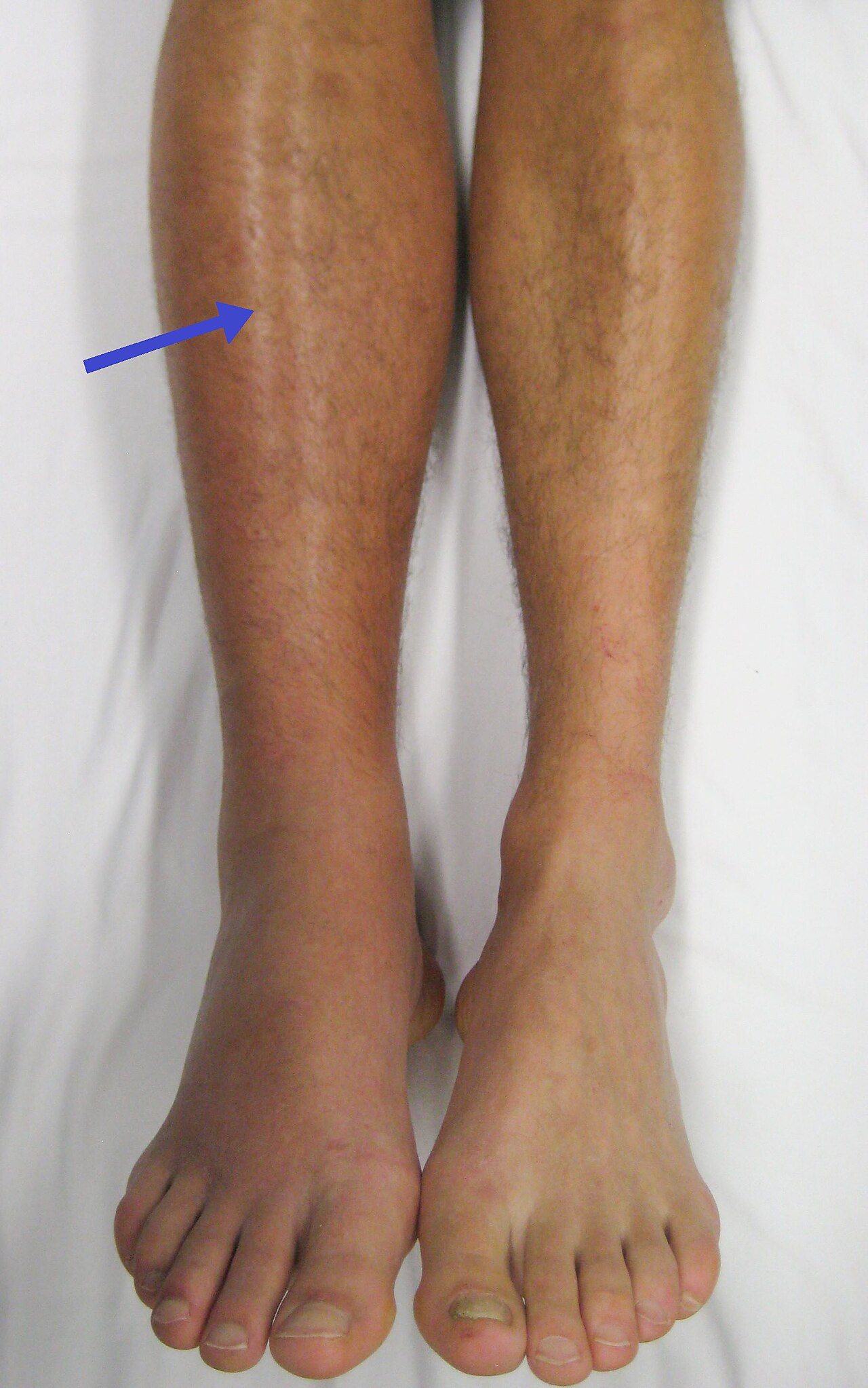
D-dimer is used to RULE OUT venous thromboembolism (VTE) in patients with LOW or MODERATE clinical probability (Wells or Geneva score). A normal D-dimer effectively excludes DVT/PE. It should NOT be used in high-probability patients — go straight to imaging. False positives are common: infection, inflammation, cancer, pregnancy, elderly age, recent surgery.
D-dimer measures cross-linked fibrin degradation products — sensitive but very non-specific. Standard cut-off is < 500 ng/mL (fibrinogen equivalent units). The 2019 ESC PE guideline and NICE NG158 endorse age-adjusted cut-offs in patients > 50 years: threshold = age × 10 ng/mL — this reduces unnecessary CTPA in older adults by up to 30% without missing PE. The YEARS algorithm further reduces imaging by adjusting the threshold to 1000 ng/mL if none of three YEARS criteria (haemoptysis, DVT signs, PE most likely diagnosis) are present. Critical rule: NEVER use D-dimer in high pre-test probability (Wells score for PE > 4, or two-tier Wells for DVT > 2) — a negative result does not exclude VTE at high probability. False positives: any inflammation, malignancy, pregnancy (progressively rises through gestation), recent surgery or trauma, aortic dissection, DIC. Age-adjusted D-dimer is now standard of care and should be used routinely.
- Standard cut-off
- < 500 ng/mL FEU
- Age-adjusted (> 50 y)
- Age × 10 ng/mL
- YEARS threshold
- 1000 ng/mL if no YEARS criteria
- Not for
- High pre-test probability
- False positives
- Infection, cancer, pregnancy, elderly, surgery
Diagnostic pathways for suspected PE
| Approach | Threshold | Reduction in imaging |
|---|---|---|
| Fixed threshold | 500 ng/mL | Baseline |
| Age-adjusted | age × 10 (if > 50) | ~5–8 % additional |
| YEARS algorithm | 500 or 1000 by criteria | ~14 % additional |
| PEGeD (Wells-adjusted) | 500 or 1000 by Wells | Similar to YEARS |
False-positive causes to consider
Infection or sepsis, active malignancy, recent surgery (up to 4 weeks), trauma, pregnancy (baseline rises to ~2000 ng/mL in third trimester).
Age itself: > 80 y often exceeds 500 ng/mL without VTE.
Systemic inflammation, aortic dissection, disseminated intravascular coagulation.
- Suspected PE — do not delay CTPA for a low pre-test probability D-dimer if breathless or hypoxic.
- Suspected massive PE (hypotension, syncope) — start empirical anticoagulation before imaging.
- Pregnancy + suspected PE — imaging pathways differ; discuss with obstetrics.
Suspected PE workup
- 1Wells score?Low/intermediate → D-dimer. High → straight to CTPA.
- 2D-dimer < age-adjusted or YEARS threshold?PE effectively excluded.
- 3D-dimer positive?CTPA (or V/Q if renal impairment or contrast allergy).
Related questions people ask
Frequently asked questions
- D-dimer rules out VTE — it does not rule in.
- Use age-adjusted threshold in patients > 50 y.
- YEARS algorithm reduces imaging further.
- Never use in high pre-test probability.
- False positives are the rule, not the exception.
References
2 sources- ESC 2019Diagnosis and Management of Acute Pulmonary Embolism
European Society of Cardiology.
academic.oup.com
- NICE NG158VTE Diseases
UK national guideline.
nice.org.uk
Evidence Snapshot
This snapshot shows verified evidence records matched to this article. It is not a diagnosis or personal medical advice.
D-dimer can be elevated for many reasons other than a clinically important venous thromboembolism, including recent surgery, trauma, infection, pregnancy, malignancy and increasing age.
Limitation. A raised D-dimer cannot, on its own, identify the underlying cause.
Related articles
 Laboratory Tests
TSH Test: Normal Range, High, Low & What Your Result Actually Means
TSH is the single most important thyroid number. Understand normal ranges by age and pregnancy, what a high or low value really tells you, and the two follow-up tests that clinch the diagnosis.
 Laboratory Tests
HbA1c Test: Normal Range, Prediabetic, Diabetic Cut-offs & How to Lower It
HbA1c reflects your average blood sugar over ~3 months. Understand every threshold — normal, prediabetes, diabetes — and the realistic actions that move the number.
 Laboratory Tests
LDL Cholesterol: Optimal Numbers, High Numbers, and How to Read Yours
LDL is the "bad" cholesterol only if you leave the story there. Understand optimal targets by risk group, the ApoB perspective, and the interventions that actually shift the number.