Hepatitis B Blood Test: How to Read HBsAg, Anti-HBc and Anti-HBs
Three antibodies and one antigen tell you whether someone is susceptible, vaccinated, currently infected, or previously infected. Learn the interpretation grid every clinician memorises.
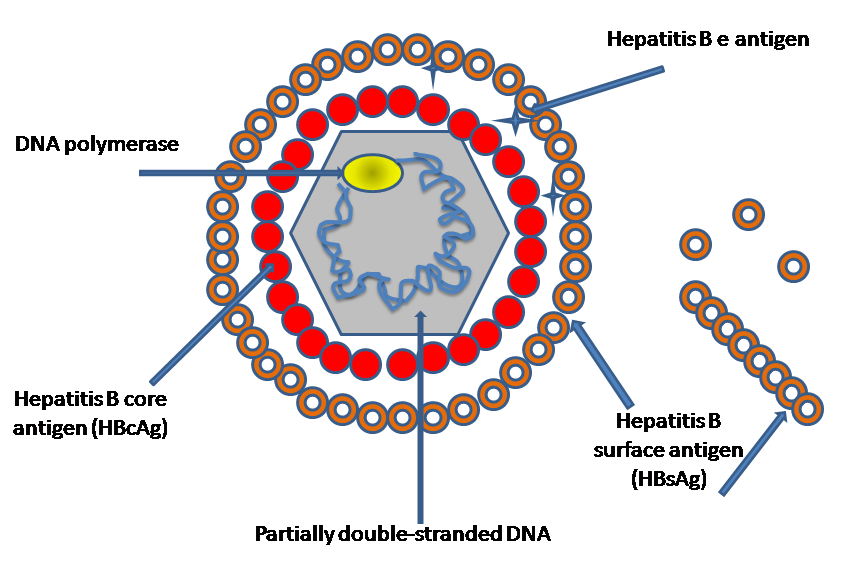
HBsAg (surface antigen) POSITIVE means currently infected. Anti-HBs POSITIVE means immunity (from vaccination if anti-HBc negative, or past infection if anti-HBc positive). Anti-HBc POSITIVE with negative HBsAg and negative anti-HBs is the "isolated anti-HBc" pattern — usually past infection or occult HBV. HBV DNA quantifies active viral replication.
Hepatitis B serology combines three antibodies (anti-HBs, anti-HBc IgG, anti-HBc IgM), two antigens (HBsAg, HBeAg) and viral load (HBV DNA). HBsAg positive > 6 months = chronic infection. Anti-HBs > 10 mIU/mL after vaccination = immunity. Anti-HBc IgM positive = acute or reactivated infection. HBeAg + high HBV DNA = high infectivity. AASLD, EASL and NICE recommend HBV screening in pregnancy, before immunosuppression or chemotherapy, in HIV or HCV positive patients, in people from high-prevalence regions, and in household or sexual contacts of infected persons.
- HBsAg positive
- Currently infected
- HBsAg positive > 6 months
- Chronic hepatitis B
- Anti-HBs > 10 mIU/mL
- Immunity (vaccine or past infection)
- Anti-HBc IgM positive
- Acute or reactivated infection
- HBV DNA
- Quantifies active replication
The interpretation grid
Serologic patterns you must recognise: (1) all negative → susceptible; (2) anti-HBs positive only → immune from vaccination; (3) anti-HBs + anti-HBc positive → immune from past resolved infection; (4) HBsAg + anti-HBc positive, anti-HBs negative → currently infected (acute or chronic depending on IgM subclass and 6-month persistence); (5) isolated anti-HBc positive → past infection with waned anti-HBs, occult HBV, or false positive.
Hepatitis B serologic patterns
| HBsAg | Anti-HBs | Anti-HBc | Interpretation |
|---|---|---|---|
| − | − | − | Susceptible — offer vaccination |
| − | + | − | Immune from vaccination |
| − | + | + | Immune from past resolved infection |
| + | − | + (IgM) | Acute HBV infection |
| + | − | + (IgG) | Chronic HBV infection |
| − | − | + | Isolated anti-HBc — past, occult, or false positive |
When to order HBV DNA
Once HBsAg is confirmed positive, HBV DNA (viral load) is measured to stage the infection: HBeAg-positive with high DNA (> 20,000 IU/mL) suggests active replication and high infectivity; low DNA with normal ALT is the "inactive carrier" state; HBeAg-negative with elevated ALT and detectable DNA is HBeAg-negative chronic hepatitis. Treatment decisions (entecavir, tenofovir) depend on DNA level, ALT and fibrosis stage.
- Acute jaundice with HBsAg positive — hospitalisation may be needed.
- HBsAg positive + pregnancy — infant vaccination + immunoglobulin at birth.
- HBsAg positive + planned chemotherapy or biological therapy — HBV reactivation risk, prophylactic antivirals.
- HBsAg positive + rising AFP or new liver mass — HCC surveillance activated.
Hepatitis B walk-through
- 1HBsAg positive first-ever?Order HBV DNA, HBeAg / anti-HBe, LFTs, HIV, HCV, HDV, and abdominal ultrasound. Refer to hepatology.
- 2HBsAg positive > 6 months?Chronic HBV. Stage by DNA + ALT + fibrosis (FibroScan). Treat when criteria met.
- 3Isolated anti-HBc?Check HBV DNA. If detectable → occult HBV. If not → past infection or false positive.
- 4HBsAg positive + immunosuppression planned?Start prophylactic entecavir or tenofovir; monitor DNA.
Related questions people ask
- What is HBeAg?
- Is anti-HBs above 10 enough for immunity?
- What is chronic hepatitis B?
- How does HBV affect liver enzymes?
- How is hepatitis C different?
- Do I need HCC surveillance with HBV?
- Is HBV curable?
Frequently asked questions
- HBsAg = currently infected.
- Anti-HBs > 10 mIU/mL = immunity.
- Anti-HBc IgM = acute/reactivated.
- HBsAg > 6 months = chronic HBV.
- Isolated anti-HBc — check HBV DNA to differentiate past vs occult.
- Screen before immunosuppression to prevent reactivation.
References
3 sources- AASLDHepatitis B Guidelines
US hepatology HBV framework.
aasld.org
- EASLHBV Clinical Practice Guidelines
European HBV management.
easl.eu
- WHOHepatitis B
Global HBV framework.
who.int
Related articles
 Laboratory Tests
TSH Test: Normal Range, High, Low & What Your Result Actually Means
TSH is the single most important thyroid number. Understand normal ranges by age and pregnancy, what a high or low value really tells you, and the two follow-up tests that clinch the diagnosis.
 Laboratory Tests
HbA1c Test: Normal Range, Prediabetic, Diabetic Cut-offs & How to Lower It
HbA1c reflects your average blood sugar over ~3 months. Understand every threshold — normal, prediabetes, diabetes — and the realistic actions that move the number.
 Laboratory Tests
LDL Cholesterol: Optimal Numbers, High Numbers, and How to Read Yours
LDL is the "bad" cholesterol only if you leave the story there. Understand optimal targets by risk group, the ApoB perspective, and the interventions that actually shift the number.