Understanding BMI in 2026: Beyond the Single Number
BMI is a starting point, not a verdict. Here is how to interpret it with body fat %, waist-to-height and lifestyle context.
Body Mass Index — your weight-to-height ratio at a glance.
BMI is a screening tool — not a diagnosis. Always combine it with other measures and clinical judgement.
In the healthy weight range. Keep up the balanced lifestyle.
Body Mass Index (BMI) is a simple ratio between your weight and your height. First proposed by Adolphe Quetelet in the 19th century, it has become the most widely used screening tool to classify weight categories in adults — from underweight through obesity.
BMI is best understood as a quick conversation-starter with your body, not a verdict. It can hint at whether your weight may be affecting your health, but it cannot describe your body composition, fitness, or wellbeing on its own.
The formula is elegantly simple — weight divided by the square of height:
BMI = weight (kg) / height (m)²
= weight (lb) × 703 / height (in)²Elements84 applies the metric formula internally and converts your imperial inputs precisely (1 in = 2.54 cm, 1 lb = 0.45359237 kg) so unit switching never changes your result.
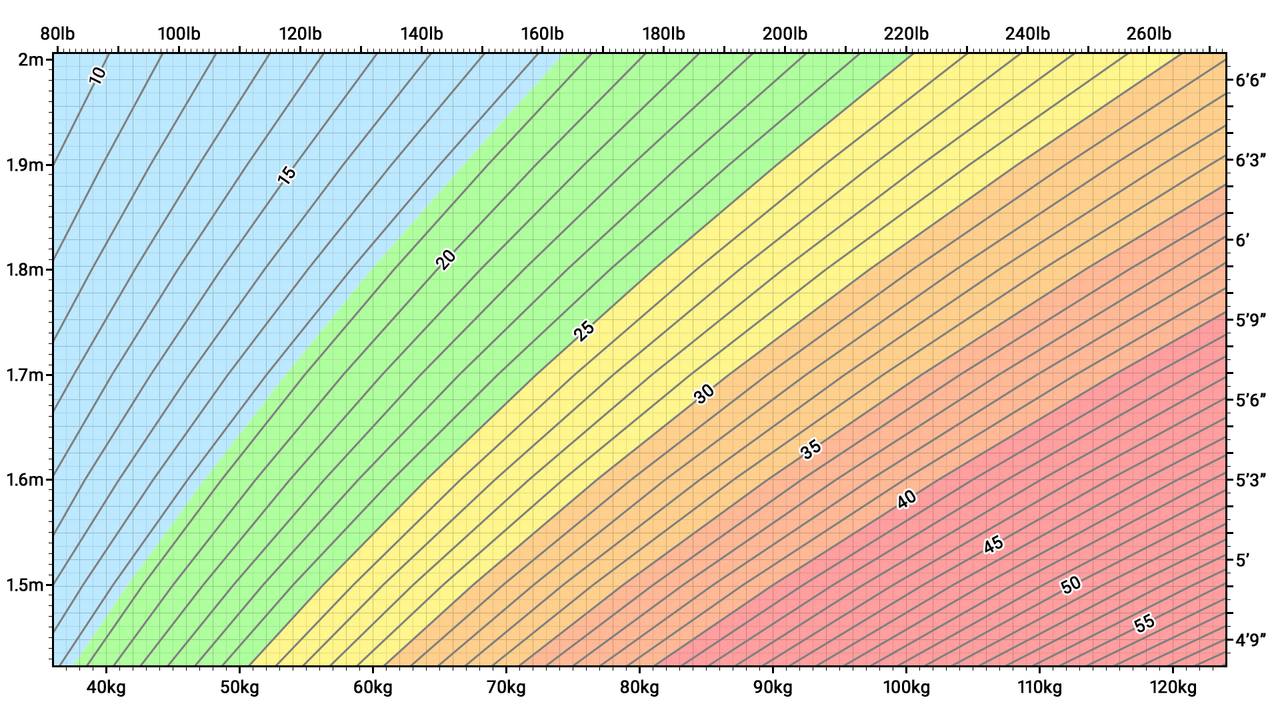
The World Health Organization defines six standard adult BMI categories — from underweight through three classes of obesity. Below, you’ll find a colour-coded reference you can compare your result against, plus what each range typically suggests.
| Category | Range |
|---|---|
| Underweight | 0 – 18.5 |
| Normal weight | 18.5 – 25 |
| Overweight | 25 – 30 |
| Obese (Class I) | 30 – 35 |
| Obese (Class II) | 35 – 40 |
| Obese (Class III) | ≥ 40 |
BMI is a starting point, not a verdict. Here is how to interpret it with body fat %, waist-to-height and lifestyle context.
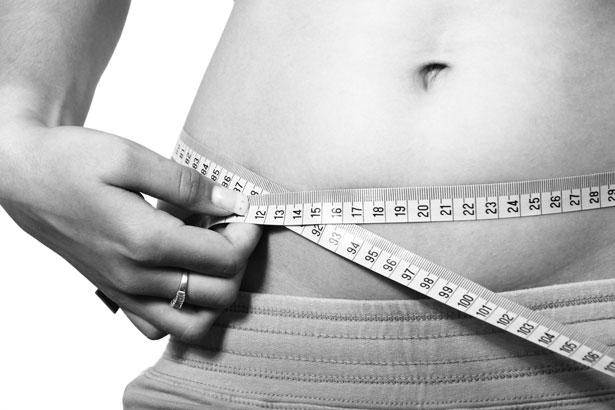
A tape measure and one ratio reveal more about your metabolic risk than the bathroom scale ever could.
Forget your weight. The number that quietly drives your BMR, your protein needs and your training results is the lean mass underneath.
The "8 glasses a day" rule is a myth. Modern physiology gives us a far more elegant — and personal — answer.