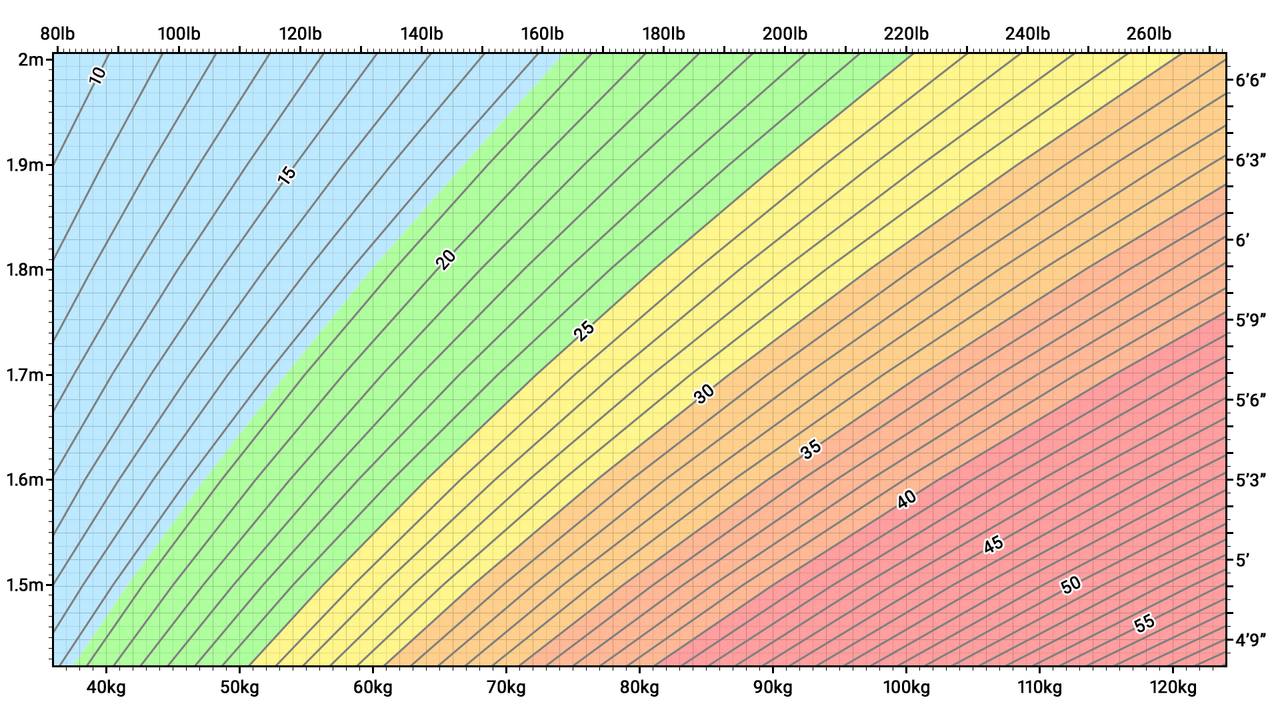
Understanding BMI in 2026: Beyond the Single Number
BMI is a starting point, not a verdict. Here is how to interpret it with body fat %, waist-to-height and lifestyle context.
BSA for medical dosing and clinical reference.
BSA values are clinical references — for actual dosing, defer to your clinician.
Body Surface Area (BSA) estimates the total surface area of your body — useful clinically because many physiological processes (heart output, drug dosing, fluid resuscitation, dialysis) scale better with surface area than with weight alone.
Mosteller (1987) is the simplest and most widely used in clinical practice. Du Bois (1916) is the historical reference. Haycock (1978) is particularly suited to children. Boyd (1935) is the oldest and least commonly used today.
Chemotherapy and other narrow-therapeutic-index drugs are dosed per m² of BSA. Cardiology uses indexed cardiac output (CO/BSA). Burn assessments and dialysis flow are calibrated to BSA, too.
BMI is a starting point, not a verdict. Here is how to interpret it with body fat %, waist-to-height and lifestyle context.
A tape measure and one ratio reveal more about your metabolic risk than the bathroom scale ever could.
Forget your weight. The number that quietly drives your BMR, your protein needs and your training results is the lean mass underneath.
The "8 glasses a day" rule is a myth. Modern physiology gives us a far more elegant — and personal — answer.